Things to Do in Sarandë & Ksamil | Ancient Ruins and Turquoise Waves
Contents[hide]
Sarandë: Bunkers, Beaches & The Evening "Xhiro"
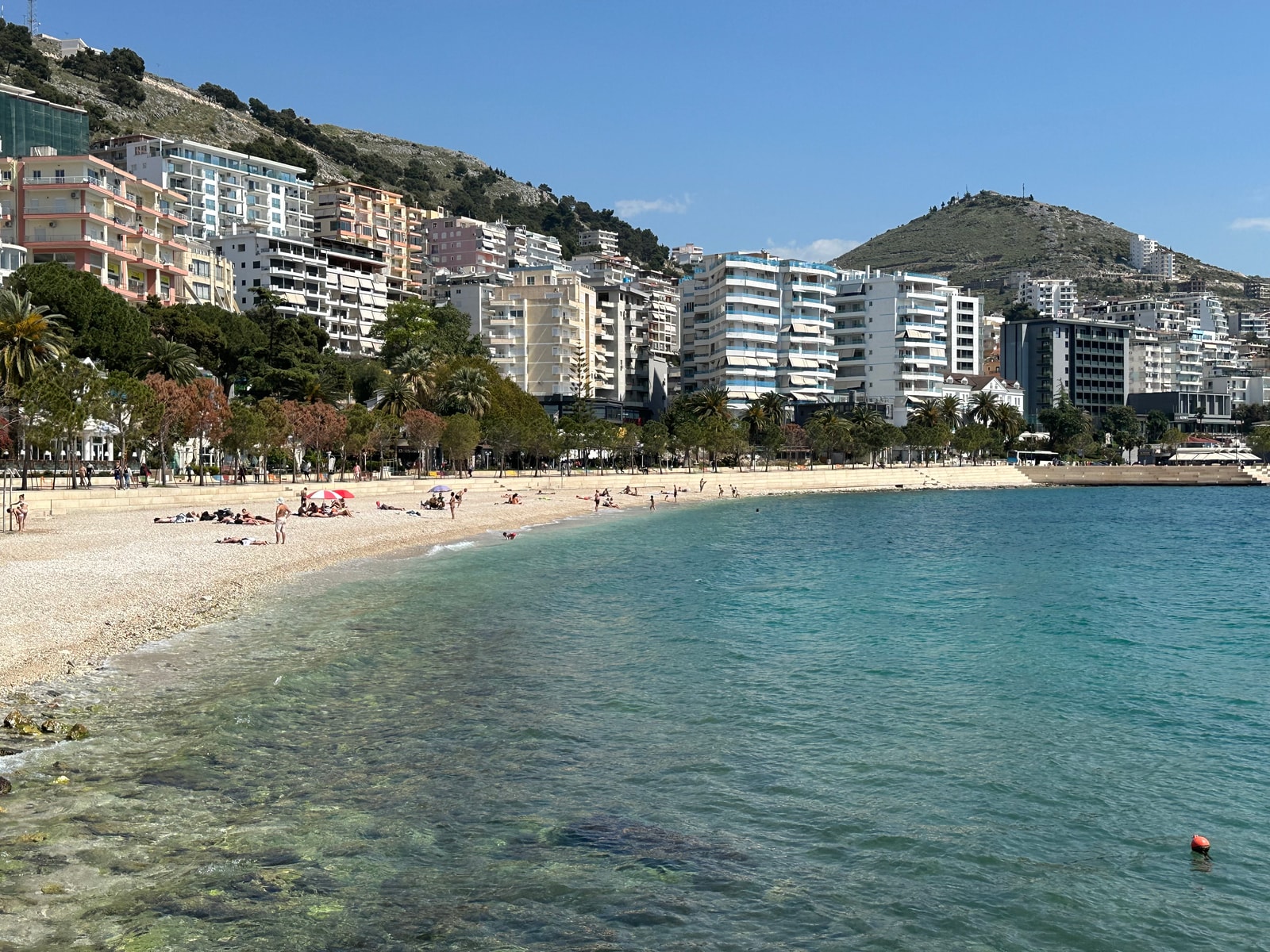
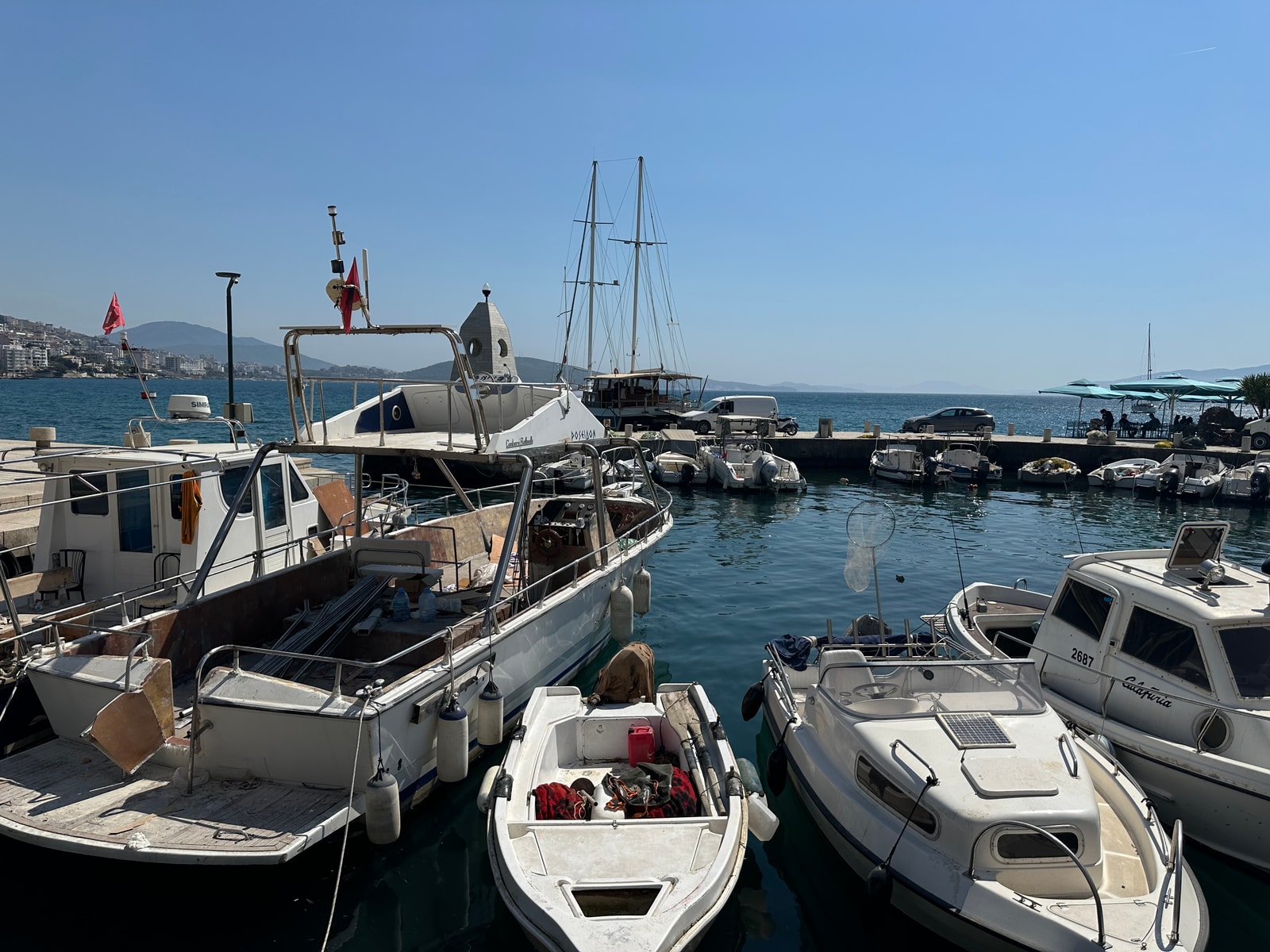
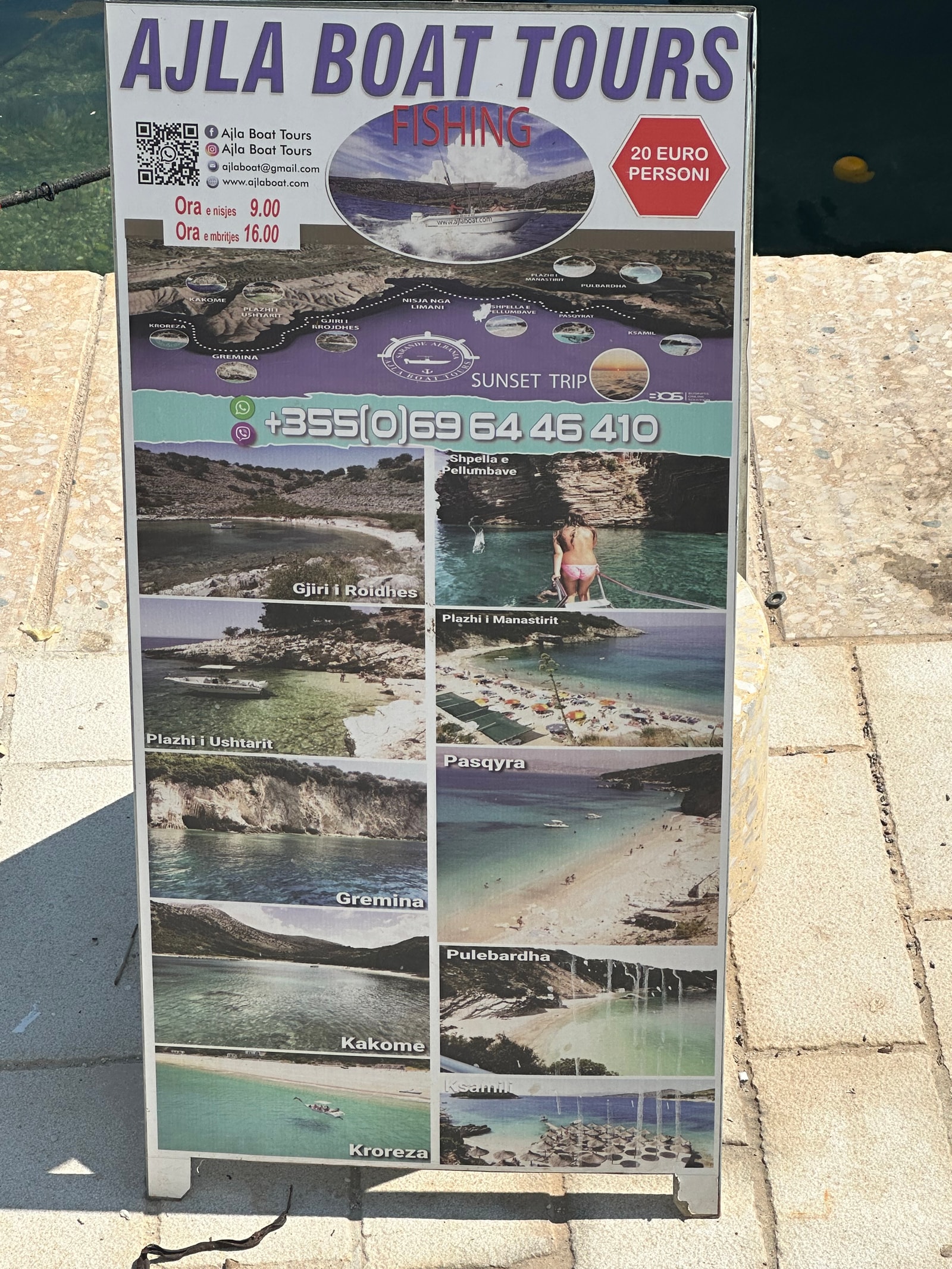
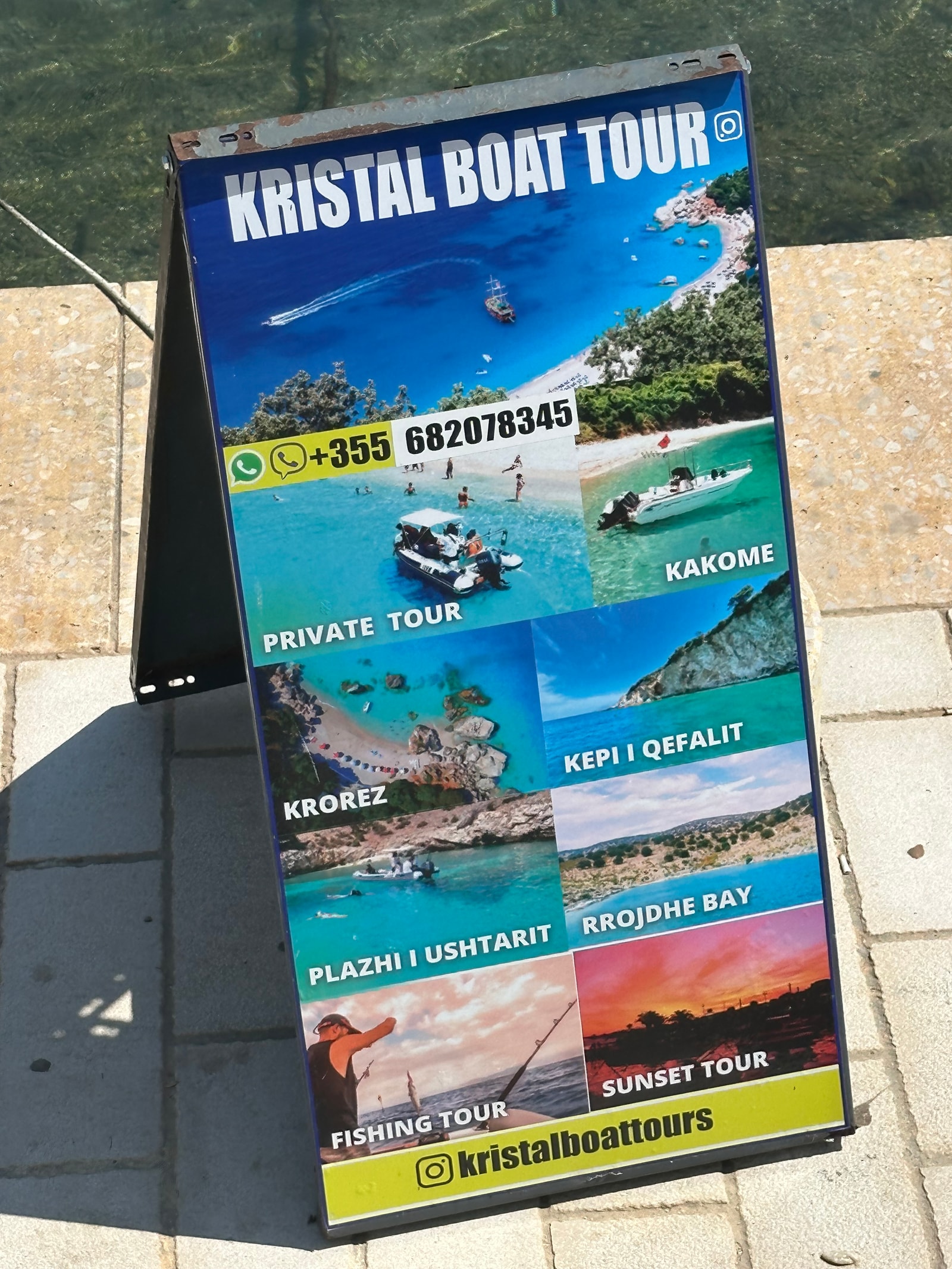
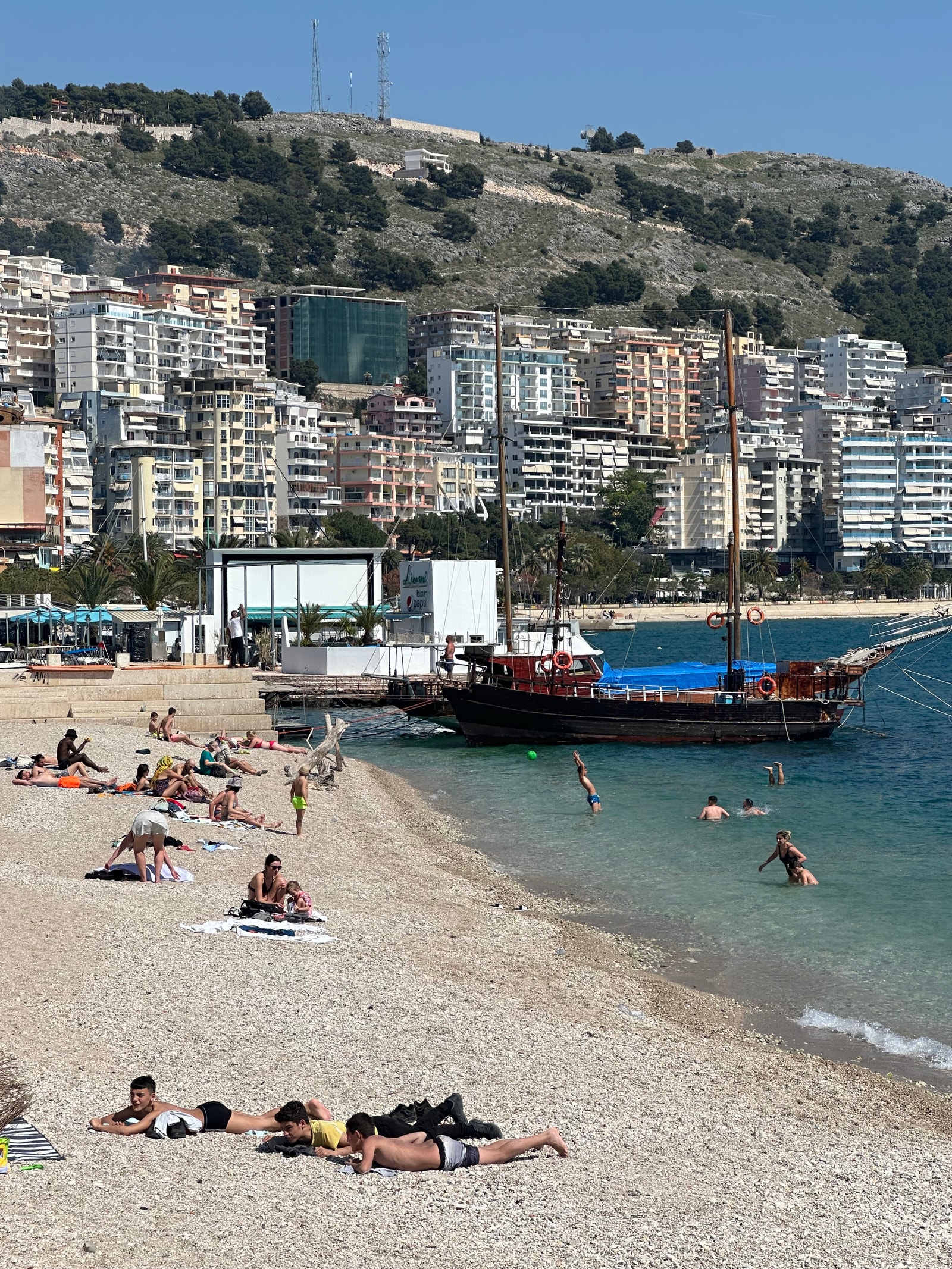
Sarandë is your quintessential coastal town, beautifully built around a horseshoe-shaped bay. A long, scenic waterfront promenade stretches around the shoreline, dotted with free public beaches, lively restaurants, and bars. There's even a quirky pub called Elvis Bar Sarandë, dedicated to the King of Rock and Roll. Strolling along the promenade is incredibly relaxing. It's the perfect place to slow down and slip into a true holiday mood, with the sea breeze instantly putting you in vacation mode. Signs advertising boat trips are everywhere, tempting visitors to head out onto the sparkling Ionian Sea.
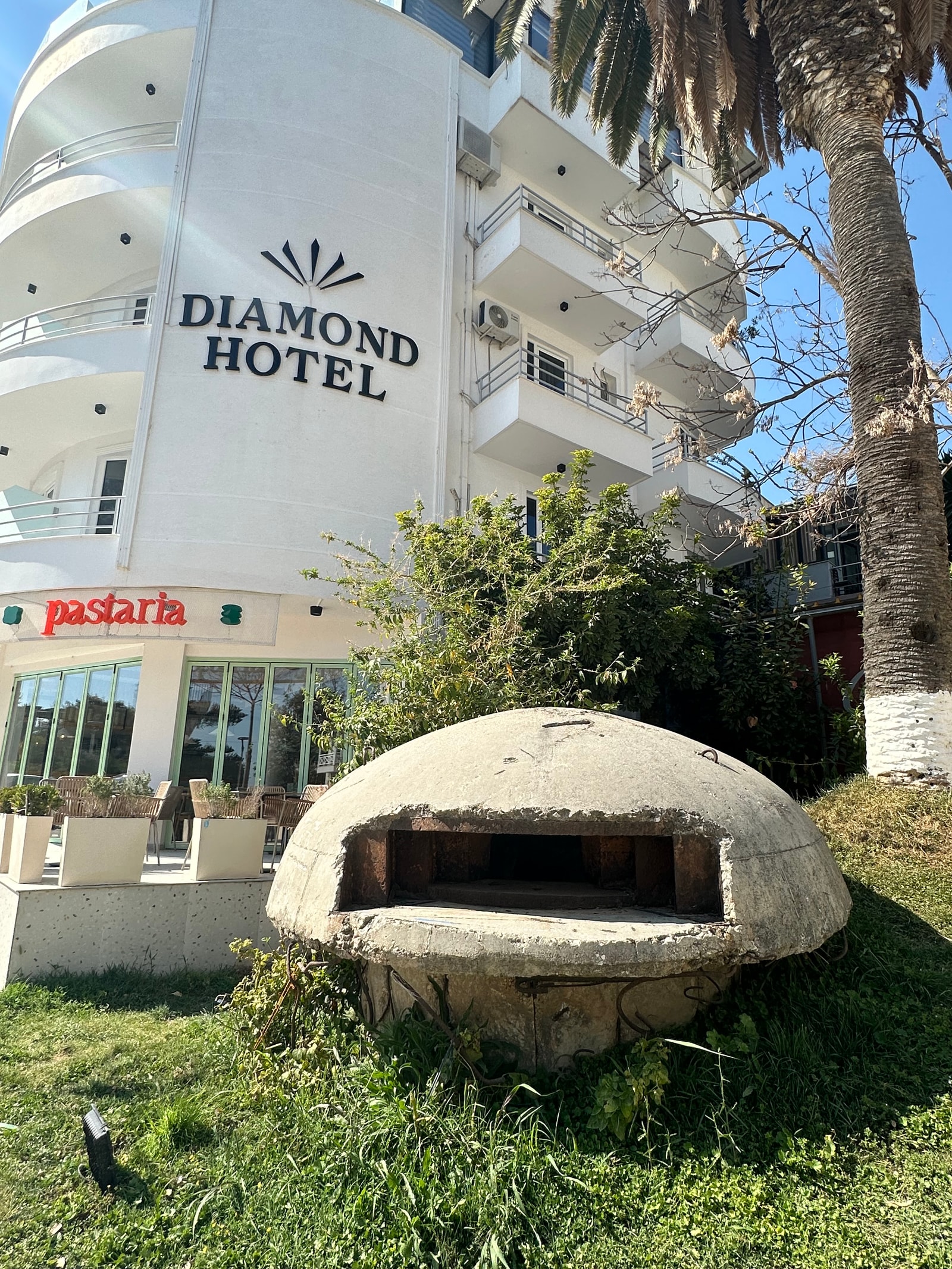
On my way to the bus ticket office, I stumbled upon a concrete communist bunker. It felt surreal to find it sitting right in the middle of the busy city center, surrounded by cafés, shops, and holidaymakers. The ticket office is here, and I highly recommend buying your bus tickets there in advance.
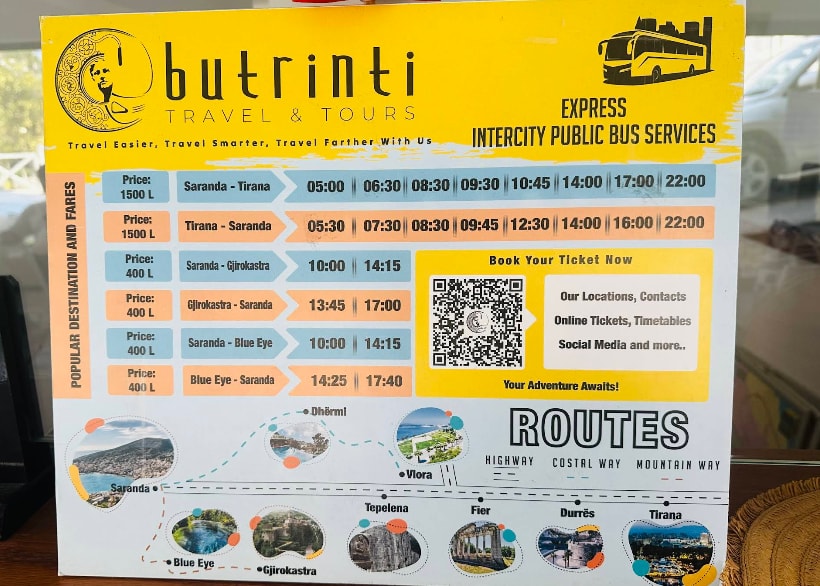
Bus Schedule & Price
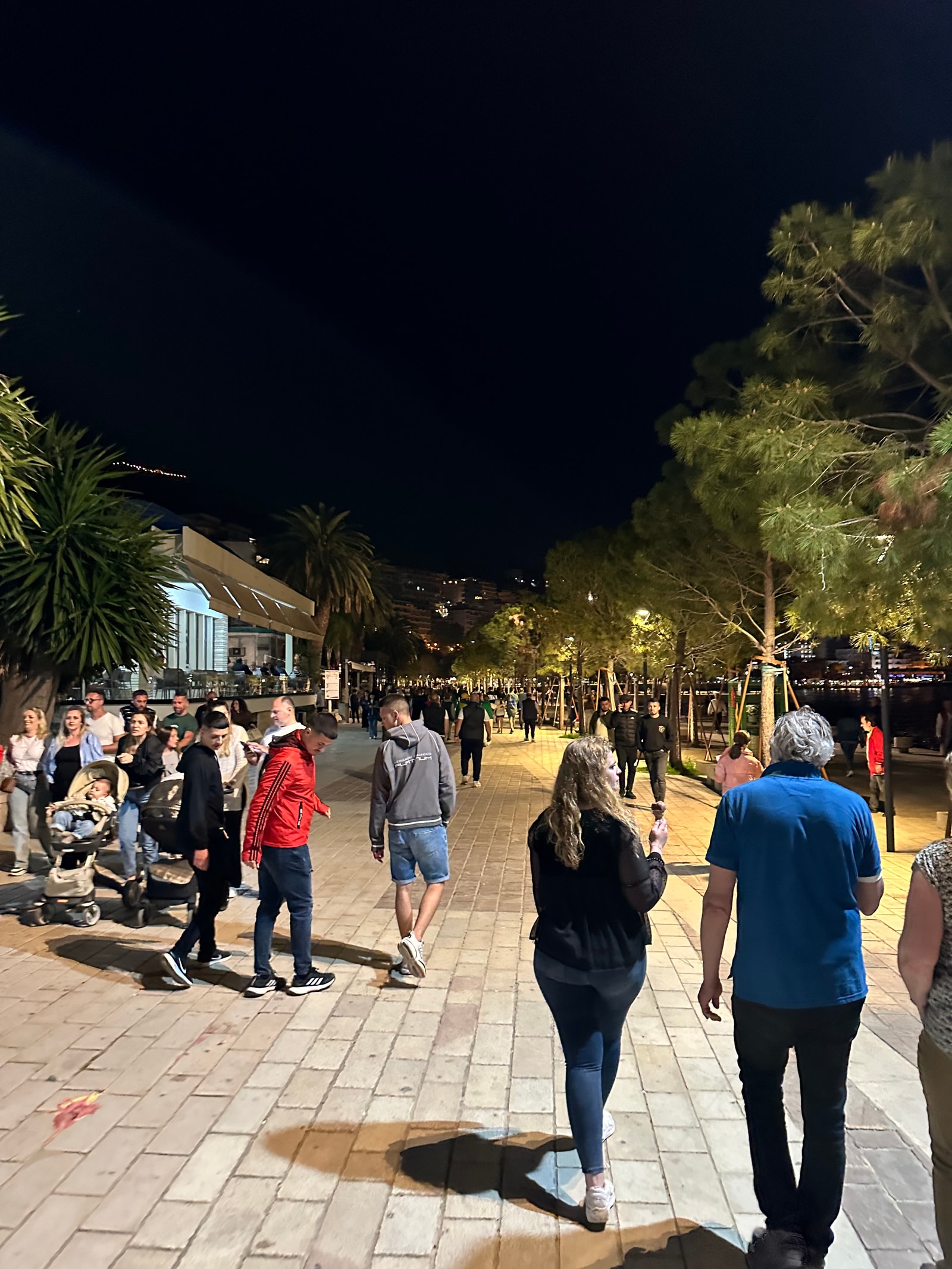
After dinner, I headed back to the waterfront promenade, and the atmosphere had completely transformed. The daytime calm had given way to crowds of locals enjoying their evening stroll. The whole place was absolutely buzzing. I later learned that this lively, communal atmosphere is part of a beloved Balkan tradition known as xhiro, during which the entire town comes out to socialize after dark.
Growing up in my hometown, people followed this exact same ritual of taking an evening walk after dinner. As the sea breeze brushed against my face, I was overcome by a sweet, unexpected wave of homesickness. In that moment, Sarandë felt strangely familiar—as if, despite being hundreds of miles from home, I had somehow found a small piece of it here.
The Hardcore Way Up to Lëkurësi Castle
Lëkurësi Castle is the best viewpoint overlooking all of Sarandë. Dating back to 1537, the fortress was commissioned by the famous Ottoman Sultan Suleiman the Magnificent during his campaign against Corfu. Perched dramatically atop a steep hill, it once served as a strategic stronghold guarding Sarandë Bay and keeping watch over the strait beyond. Today, a panoramic restaurant operates within its weathered stone walls, allowing visitors to enjoy the view in a far more peaceful setting.
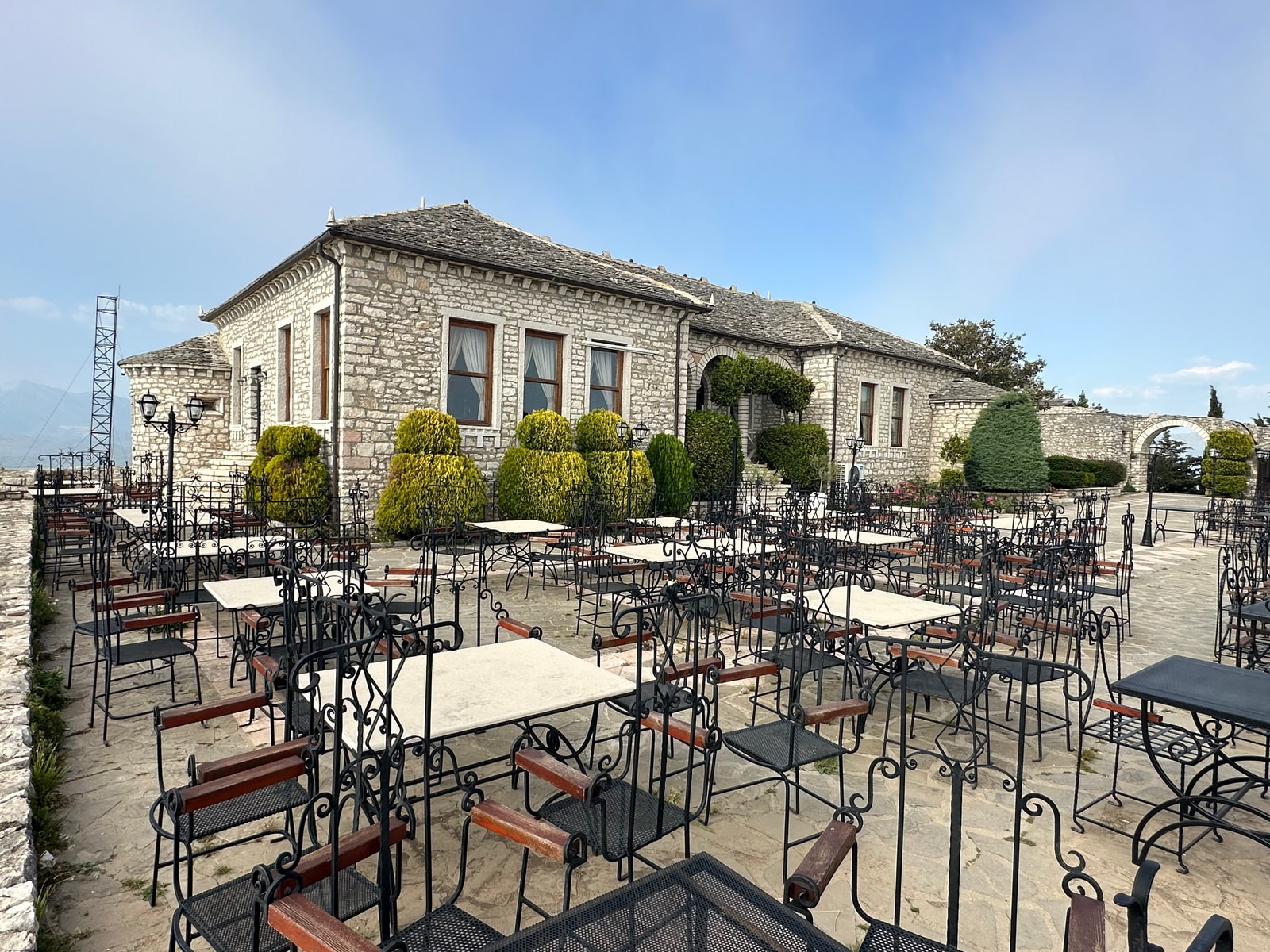
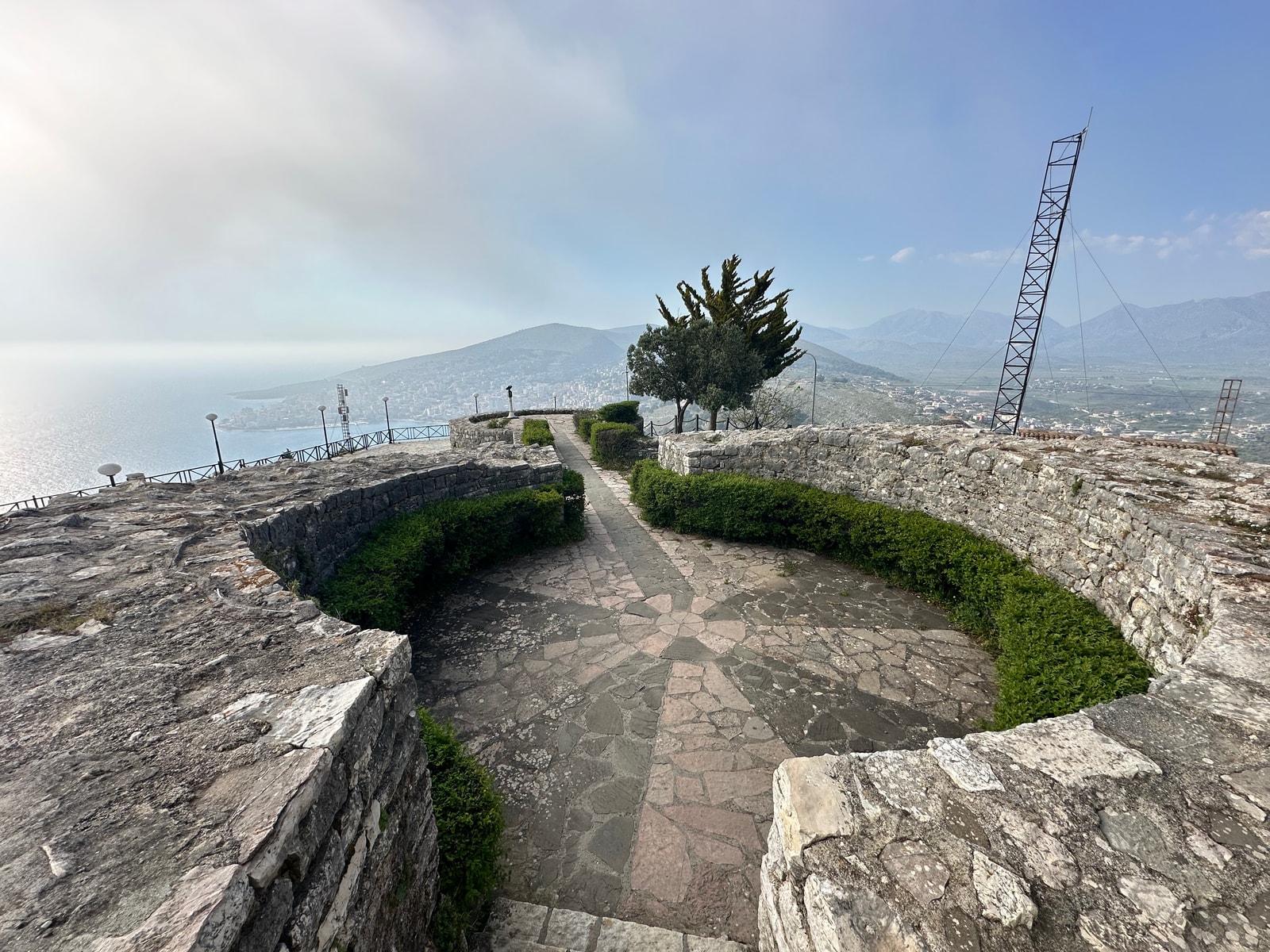
After getting my bus ticket, I decided to hike all the way up from the city center. The scenery along the route felt unmistakably Albanian. Sarandë is undergoing a tourism boom, and the hillside is dotted with newly built holiday apartments. Yet among them stand unfinished concrete skeletons, which looks like abandoned construction projects.
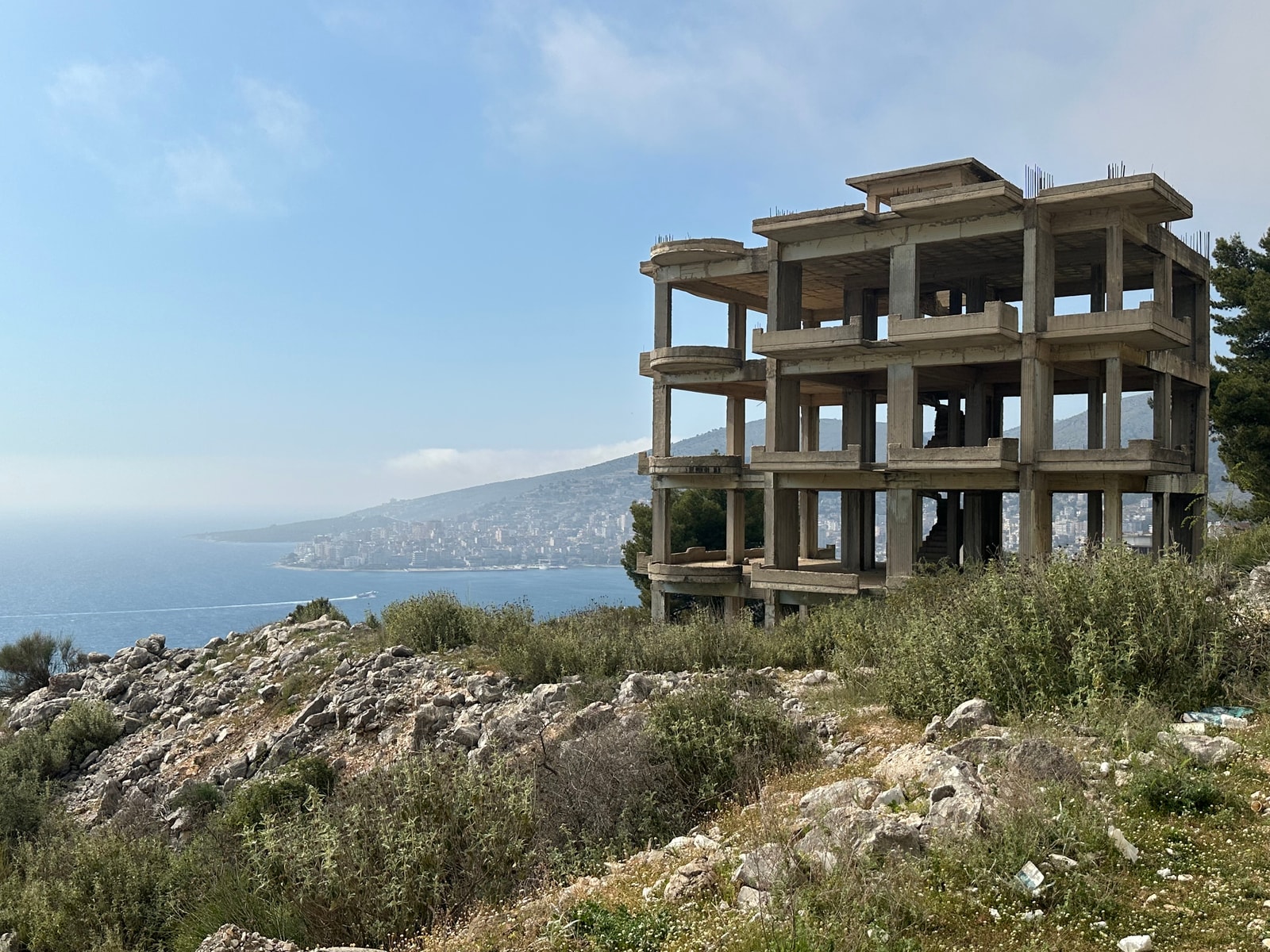
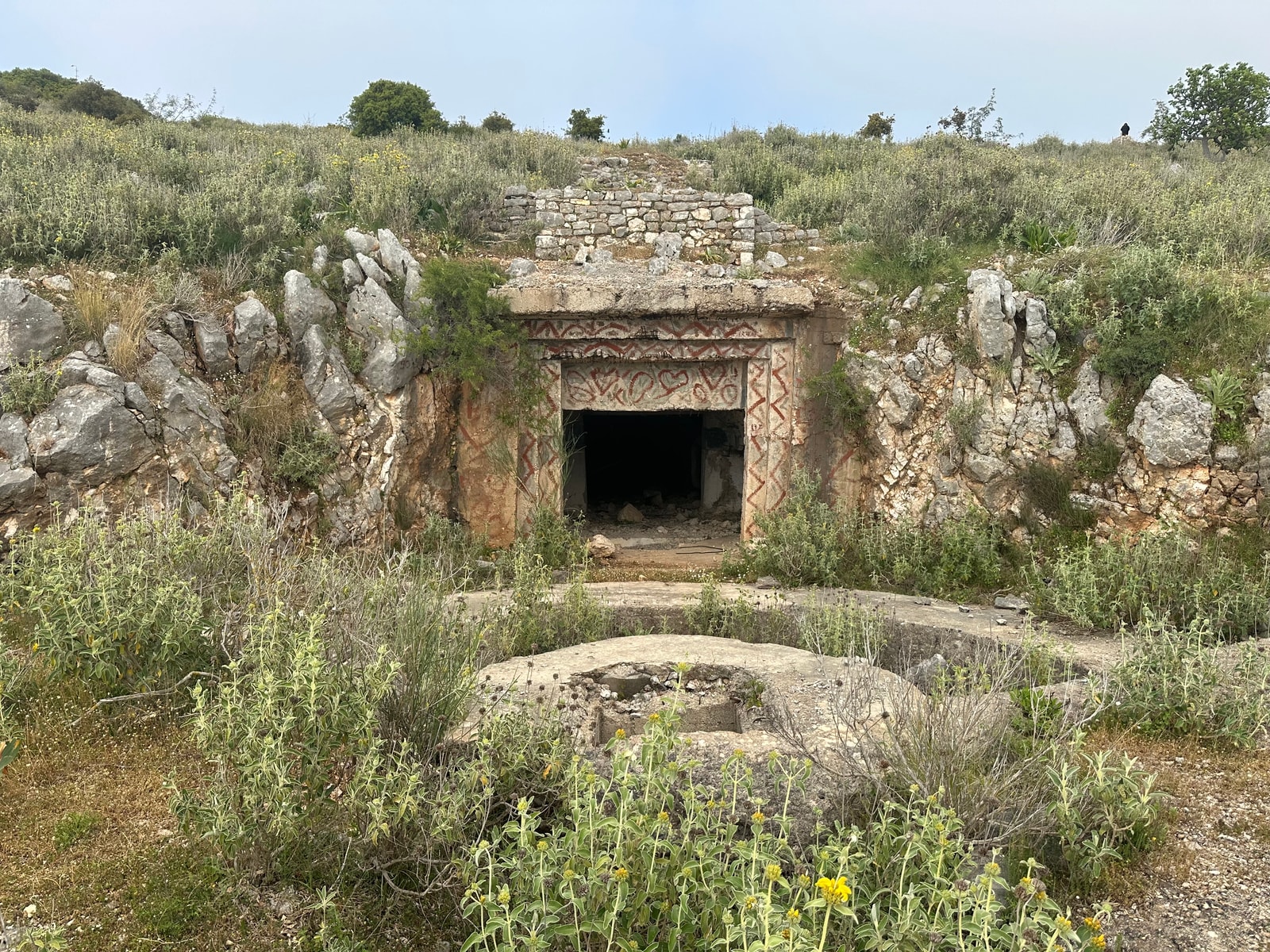
To save some distance, I eventually left the established path and scrambled directly up the rocky hillside. Along the way, I encountered a flock of sheep and even a few wild tortoises (I had spotted them in Berat as well!). Continuing upward, I stumbled upon a few concrete bunkers hidden among the tall grass near Sarandë Lighthouse. Scattered across the rugged slope, these Cold War relics silently spoke of the country's tense and isolated past. Before sunsets, dark clouds had gradually taken over the sky. After a brief visit to the castle, I decided to head back down the mountain.
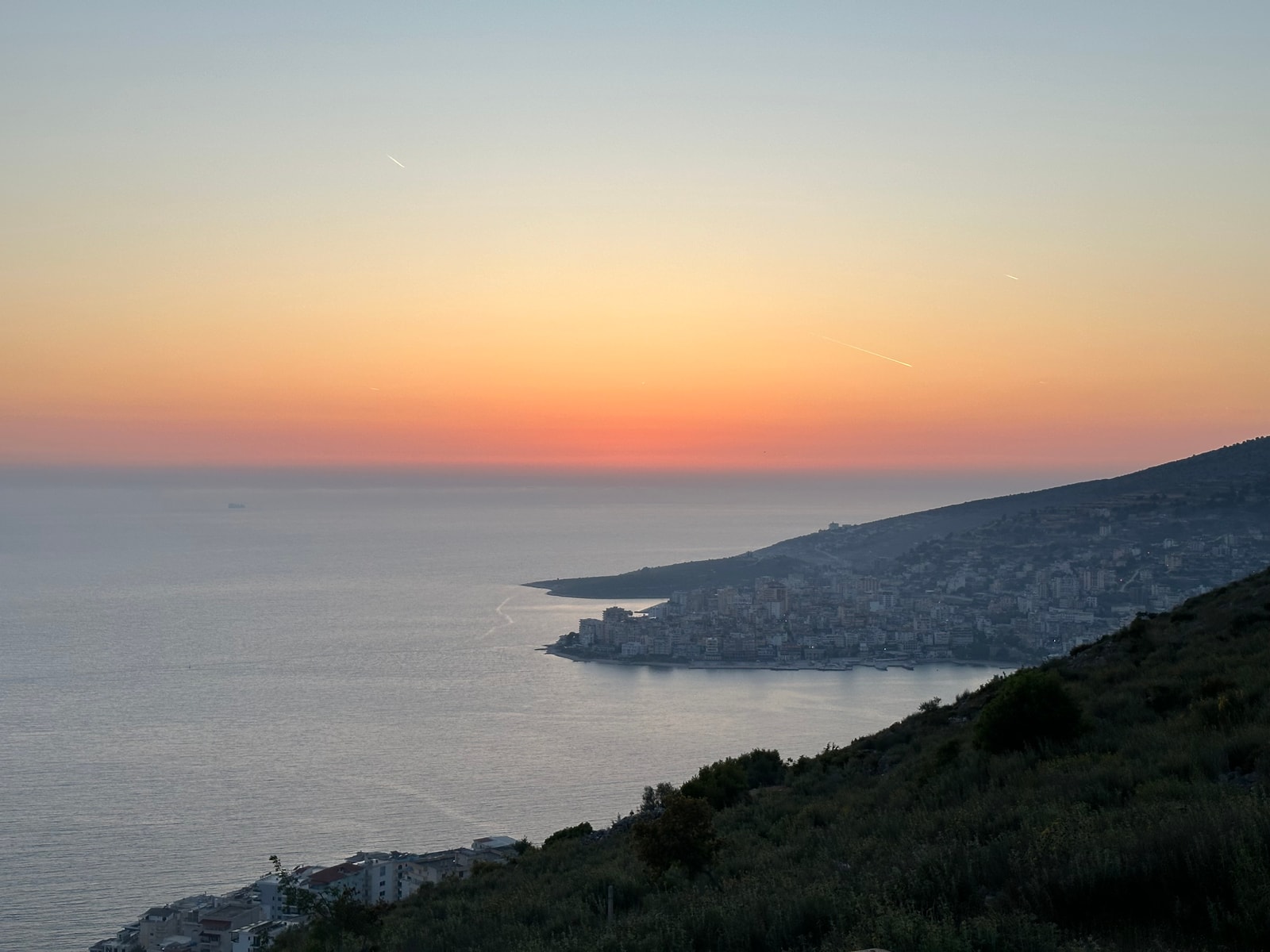
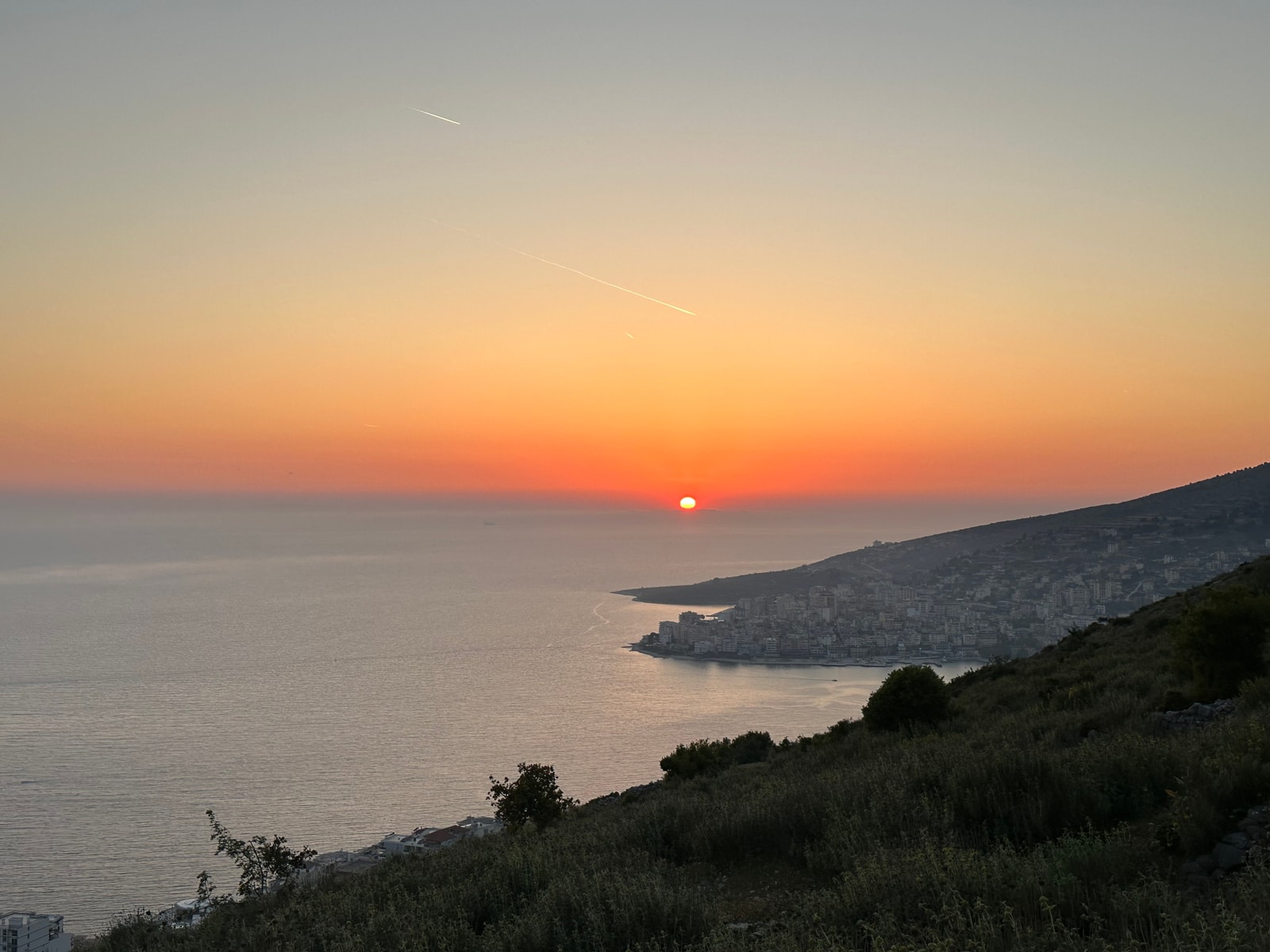
Fortunately, I returned the following evening. This time, I watched the setting sun gradually bathe the entire Bay of Sarandë in soft shades of orange and pink. It was the perfect ending to my time at Lëkurësi Castle.
Butrint: Walking Through 2500 Years
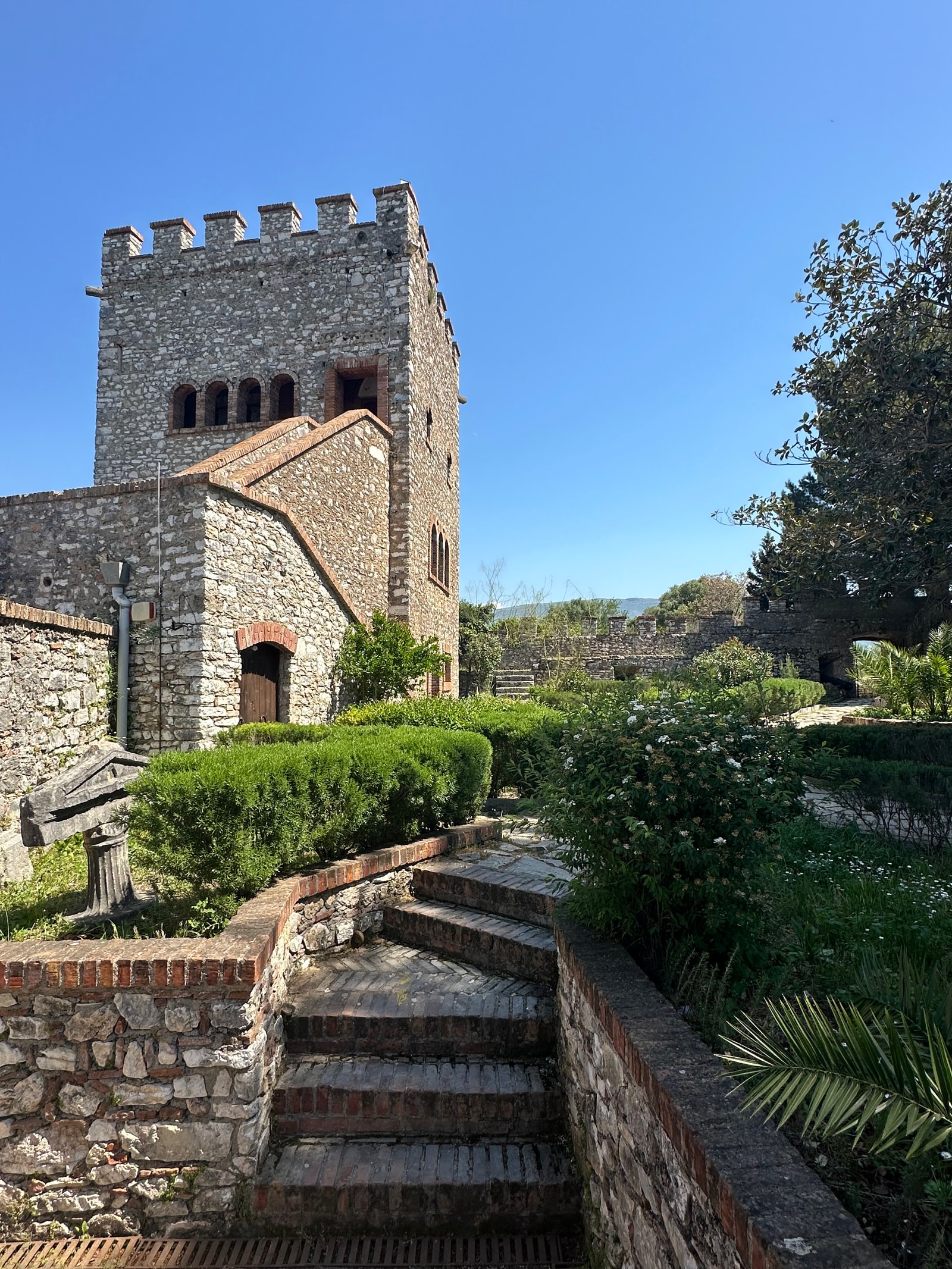
Inscribed in 1992, Butrint National Archaeological Park is Albania’s very first UNESCO World Heritage site, 14 km south of Saranda. There is a beautiful 2-kilometer loop trail here. Walking it just once feels like jumping through a time machine across five distinct eras: Greek, Roman, Byzantine, Venetian, and Ottoman. It is 2500 years of human history stacked seamlessly onto one peninsula.
Getting There: In Sarandë city center, you can catch a direct bus to Butrint for 200 LEK, from this bus stop. The bus departs every hour at half-past, passes through Ksamil, and takes about 30 minutes. The bus drops you off right outside the entrance.
Entrance Fee: Adult entry costs 1,000 LEK. Only cash accepted, but you can also buy it online.
Travel Tips:
- Grab a free map at the entrance.
- Bring cash and water.
- Wear comfortable walking shoes.
- Don't forget a hat and sunscreen.
- Free toilets are available, but there's no toilet paper.
- It takes about 2 hours.
- Pair the morning with a Ksamil beach afternoon.
The Venetian Tower (15th Century):
Right at the entrance, you are welcomed by a square, stone-built Venetian tower. If you look closely at the walls, you can actually spot ancient masonry that was salvaged and repurposed from much older ruins.
The Baptistery (6th Century):
Moving along, you’ll come across the iconic 6th-century Baptistery, the second-largest early Christian baptistery in the Eastern Mediterranean. Sixteen columns of imported Egyptian granite encircle a sunken baptismal font. The floor features an incredibly detailed mosaic pavement depicting peacocks, stags, and fish. (To protect these masterpieces from flooding and weather, the mosaics are buried under a protective layer of sand for most of the year. They are usually only uncovered briefly from mid-August to mid-September.)
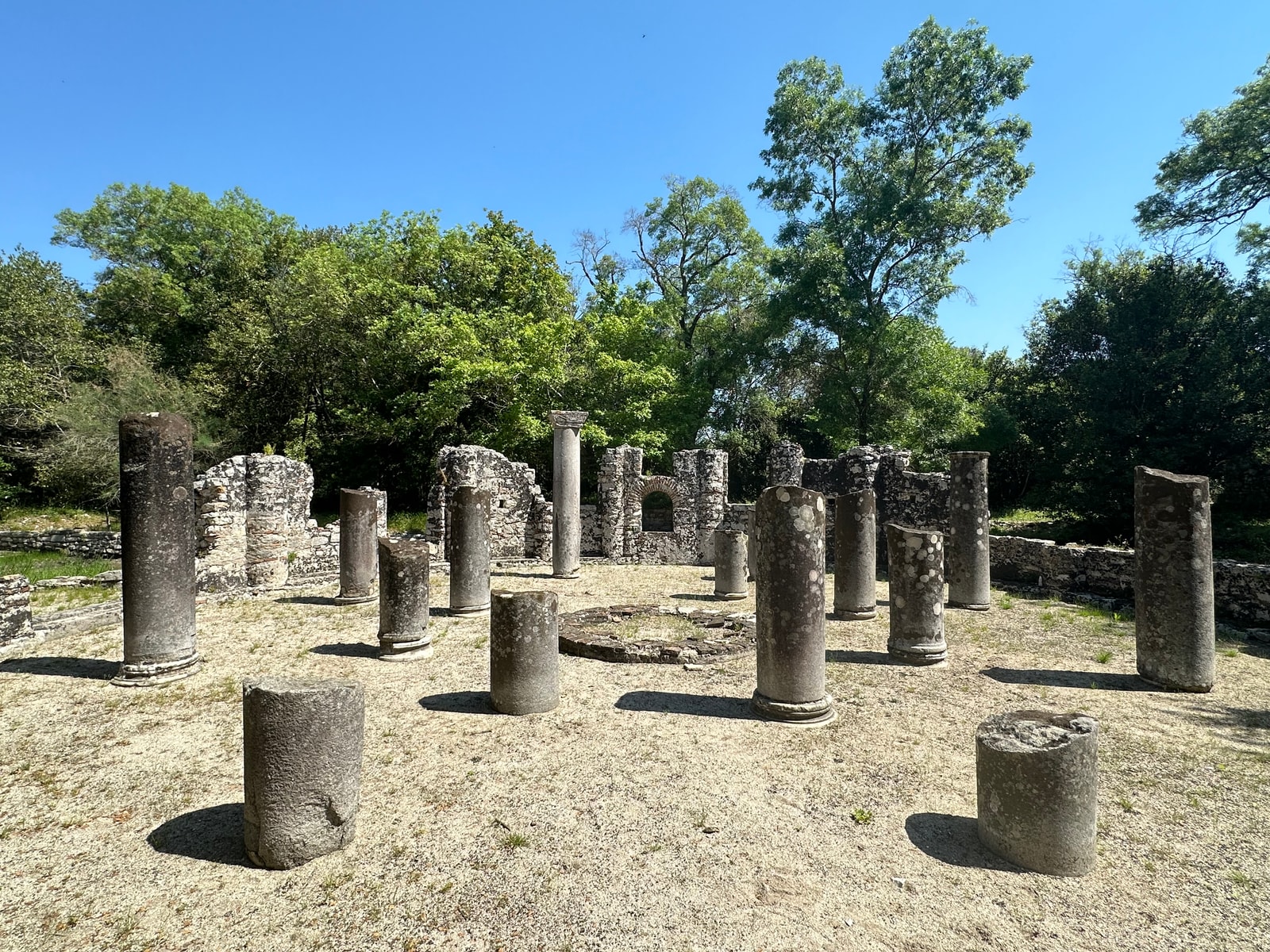
The Baptistery
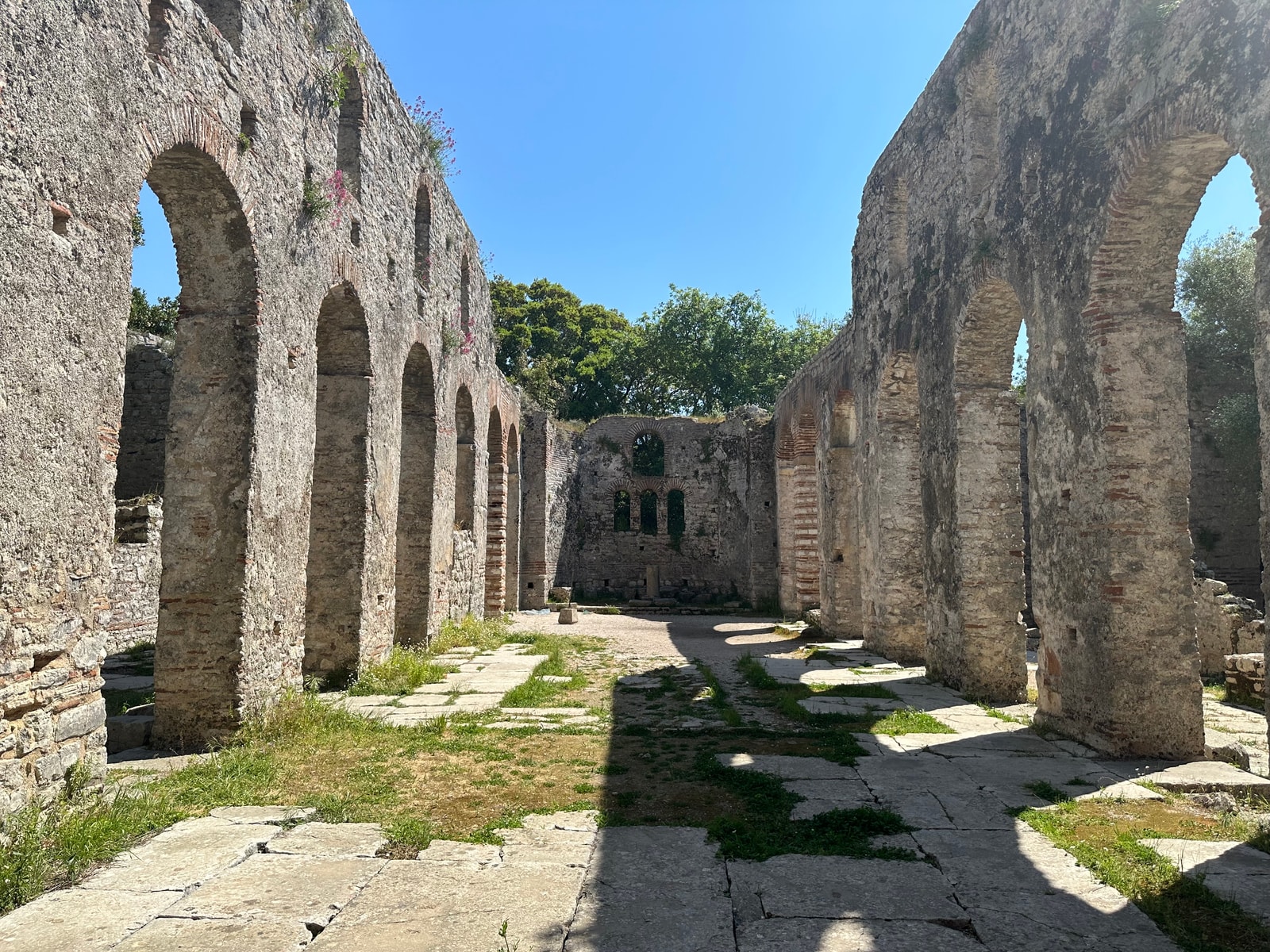
The Great Basilica
The Great Basilica & Greek Walls: Further down the path sits the Great Basilica, a three-aisled church built around the late 5th century. It remained in continuous use all the way into the 18th century, making it the longest-serving building in the entire complex. Just past it, you’ll encounter the 4th-century BC Greek walls. Piled high with massive stones and zero mortar, their sheer scale is still jaw-dropping today.
The Greek Theater: Dating back to the 3rd century BC, the Greek theater was carved directly into the hillside slope. Because of the rising water table, the front-row seats are permanently semi-submerged in crystal-clear water, creating a surreal and beautiful view. Right next to it is the Sanctuary of Asclepius (the God of Medicine), where ancient pilgrims used to sleep, hoping to receive healing dreams from the gods.
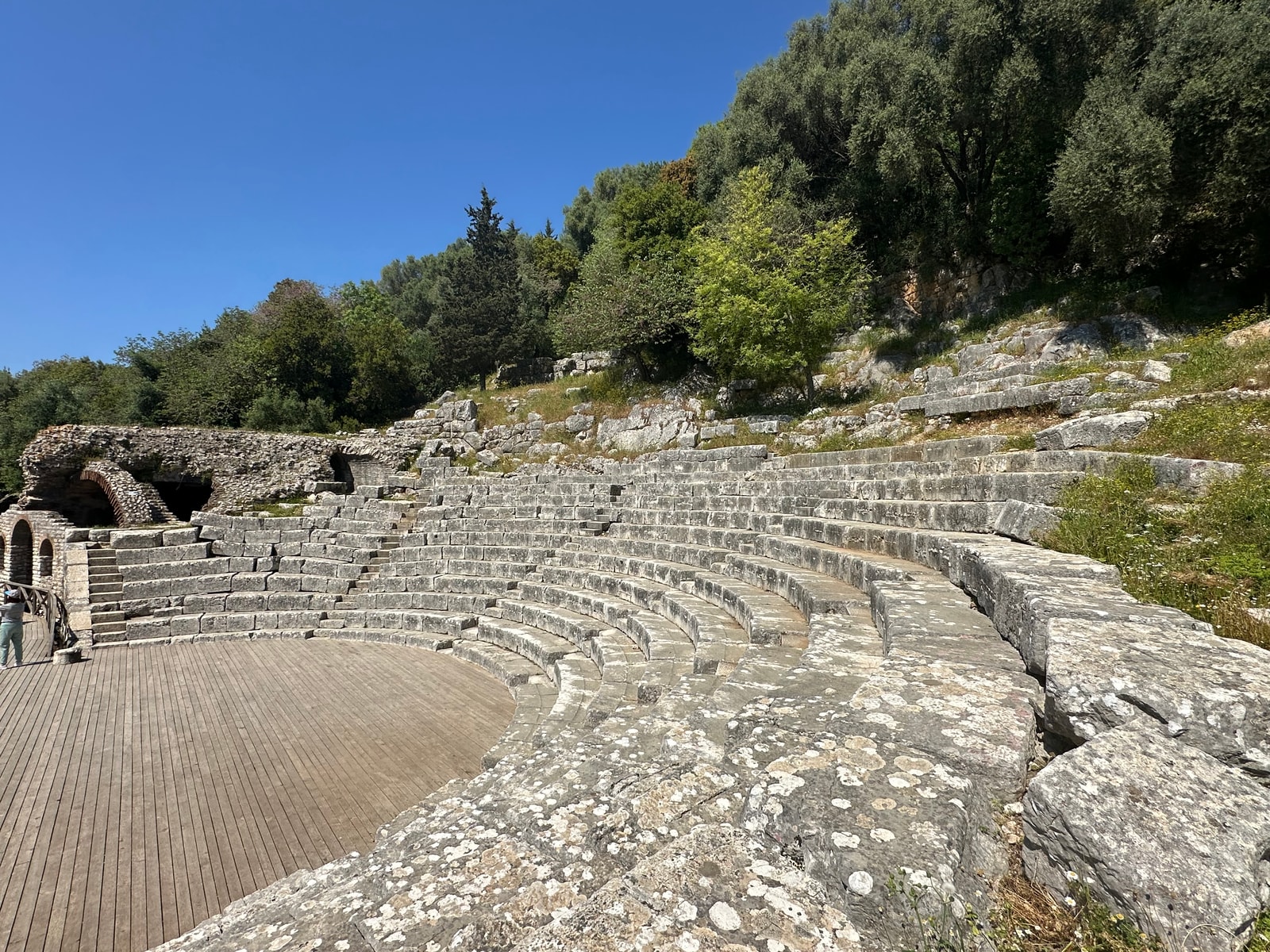
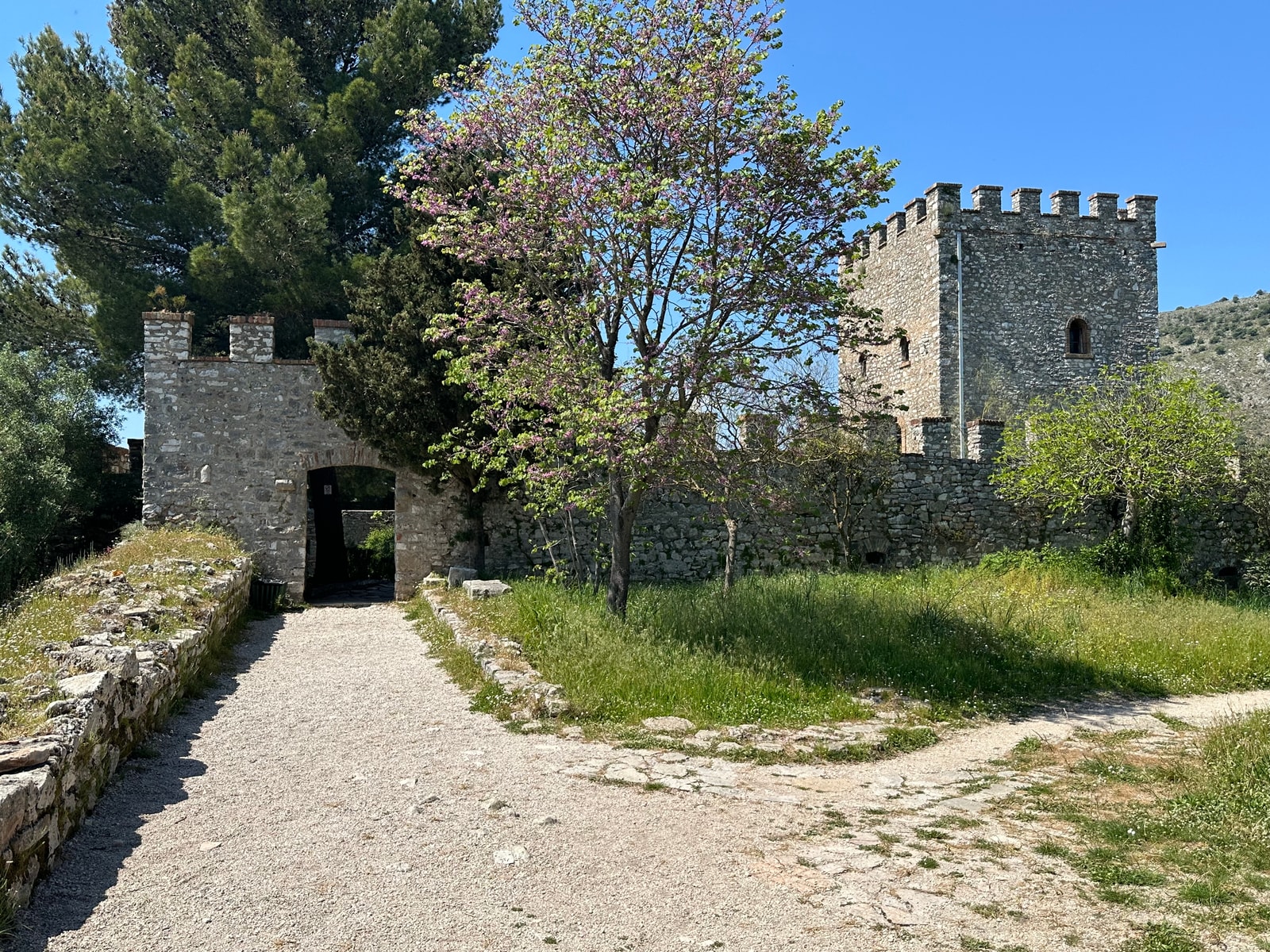
The Acropolis & Castle Museum: The grand finale is a climb of about 200 steps up to the Acropolis. The fortress at the summit was originally built by the Venetians in the 14th–15th centuries and reconstructed in the 1930s. Today, it houses an excellent on-site museum. Stepping out onto the castle ramparts offers breathtaking panoramic views.
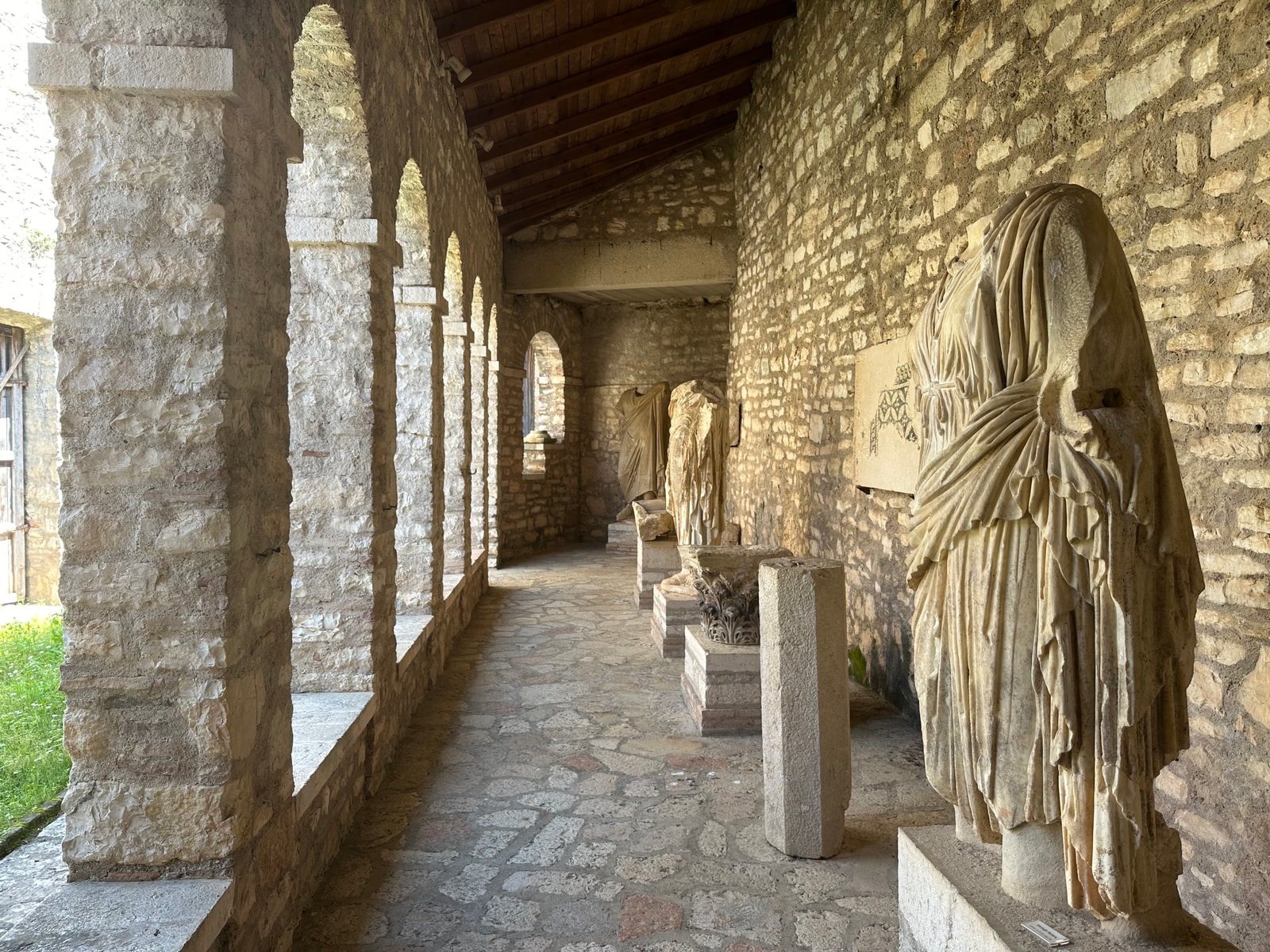
The Museum
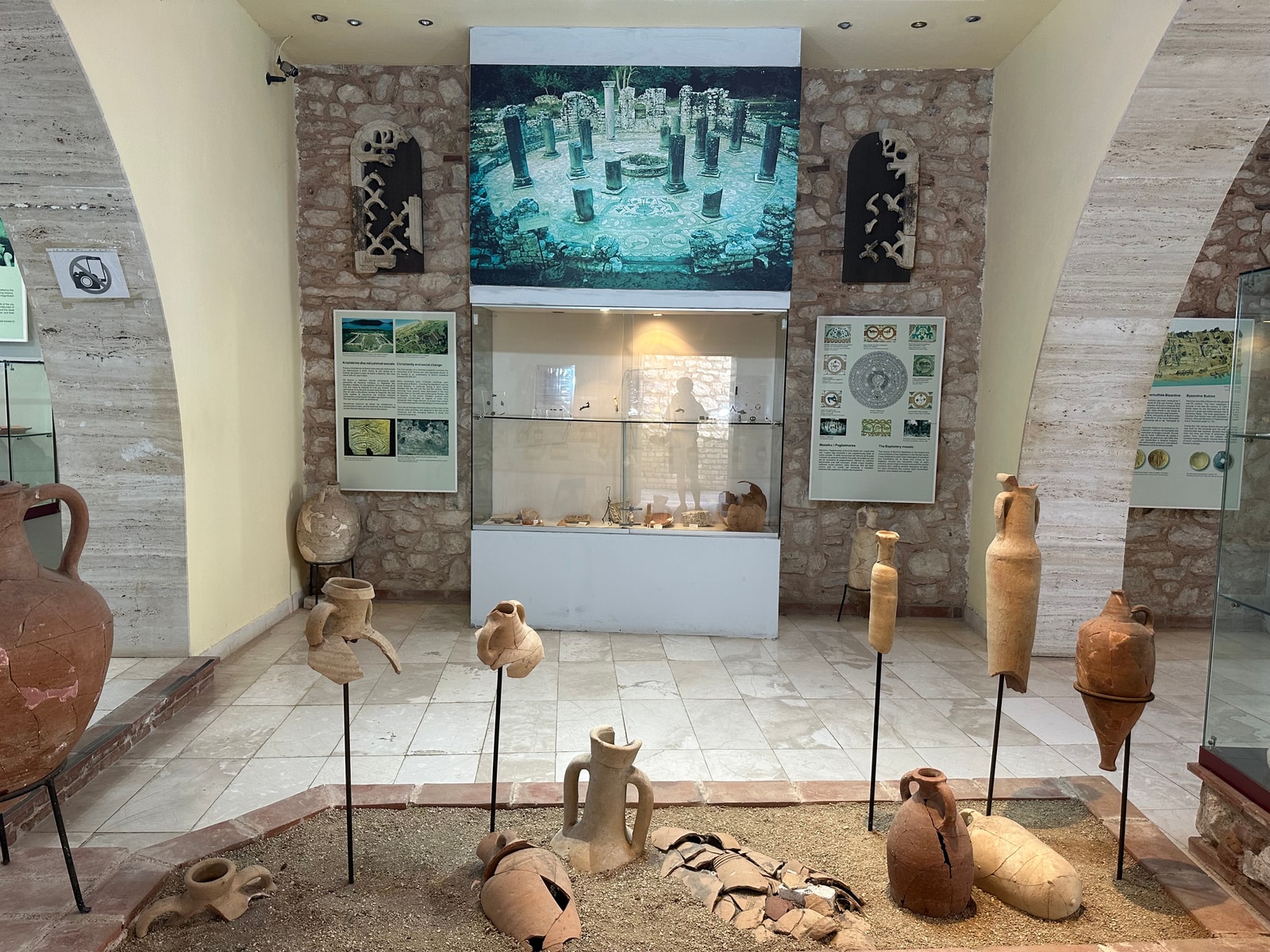
The Museum
I spent about two hours wandering through the site at a leisurely pace. If you have any appreciation for ancient history, Butrint is an absolute non-negotiable on your Albania itinerary. The best part? Unlike the packed, chaotic ruins in neighboring Greece, this place is blissfully peaceful—at least it was during my visit in April, when I had these ancient whispers almost entirely to myself.
Ksamil: How I Accidentally Starred in an Tourism Promo
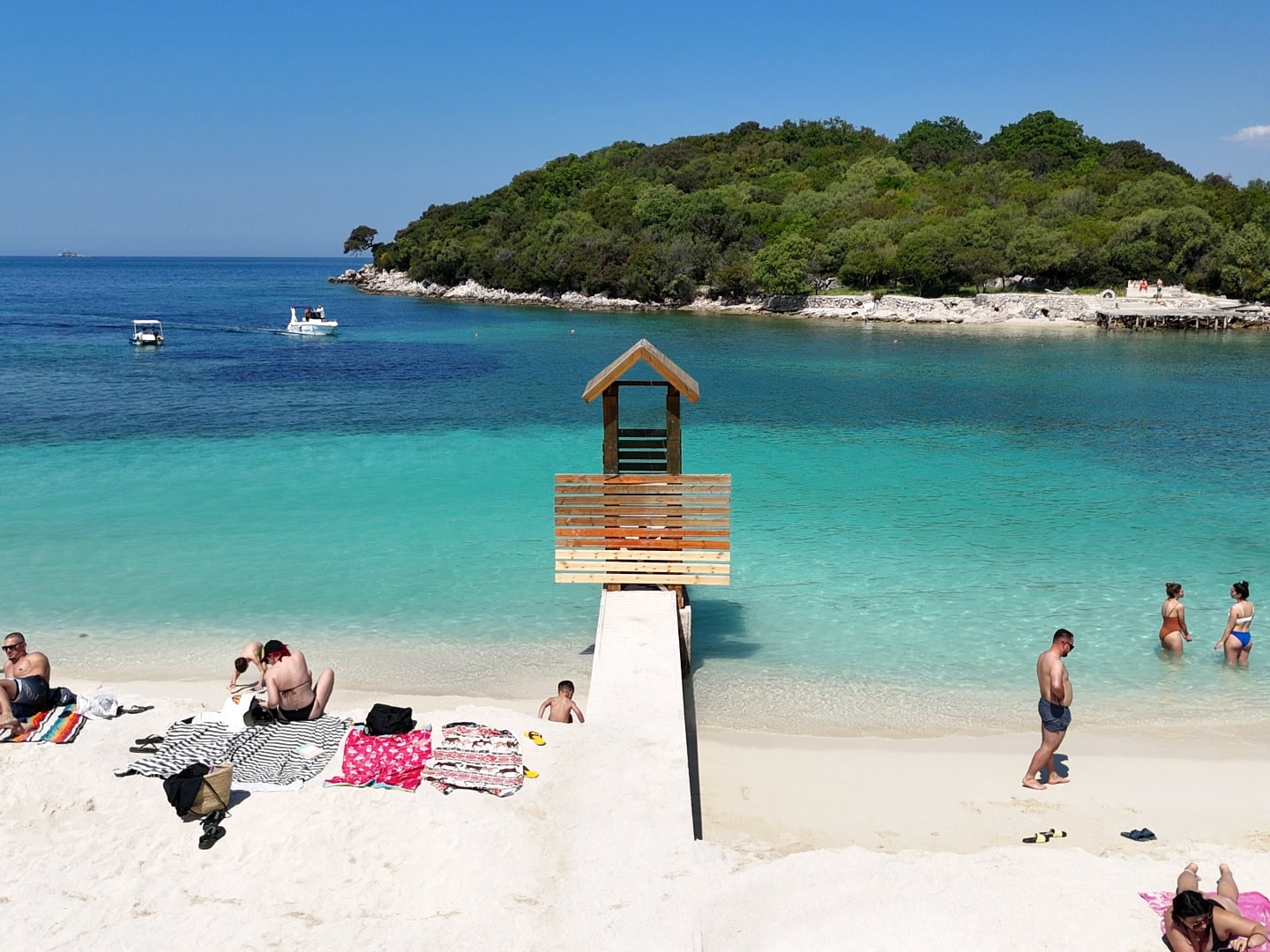
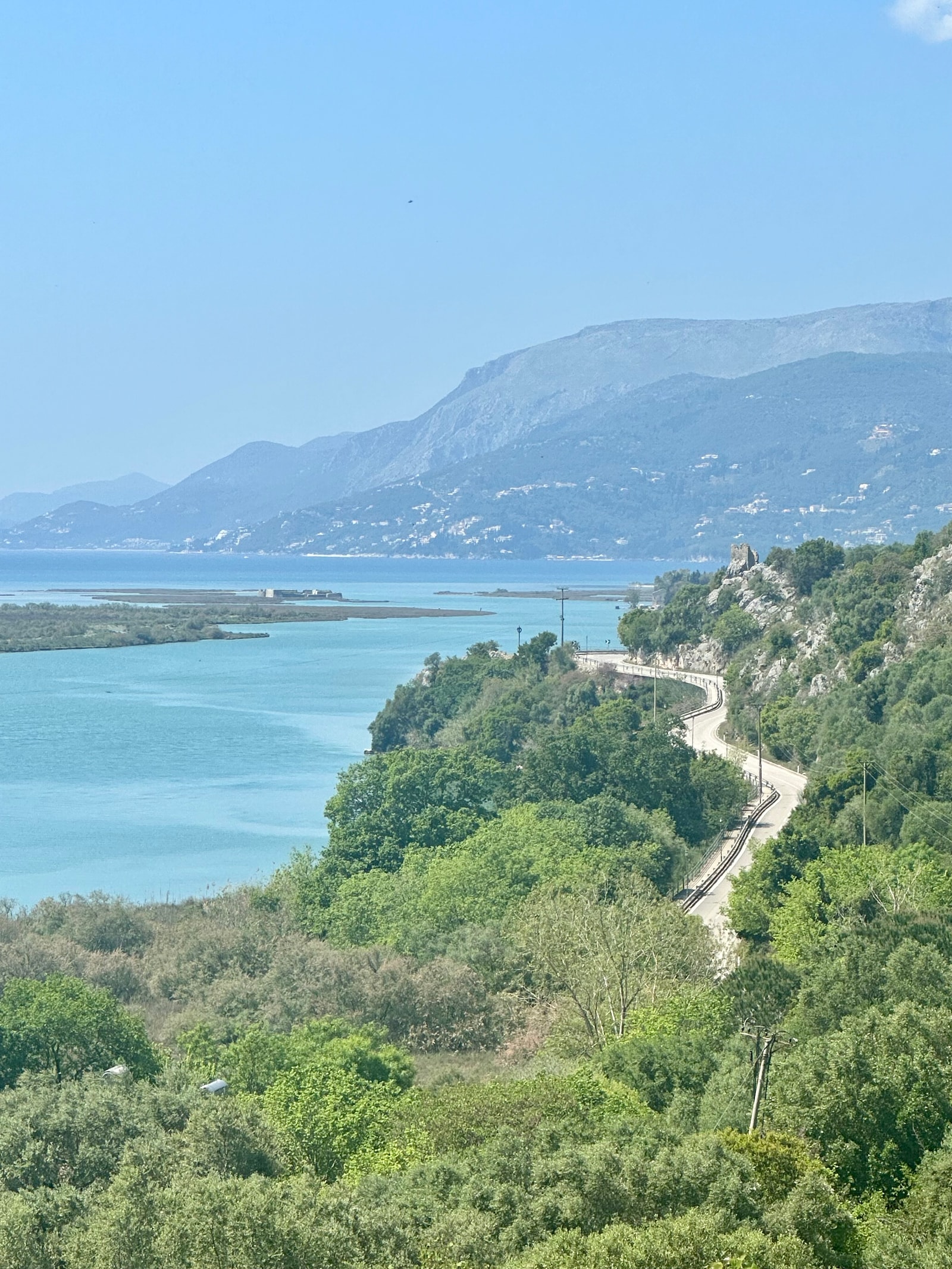
If you’ve done any research on Albania, you’ve definitely seen photos of Ksamil. Often dubbed the "European Maldives," this place is famous for its jaw-dropping, high-saturation turquoise water. After leaving the ancient ruins of Butrint, I caught the bus back to Ksamil. Even though it was only April, the white sand beaches already had a decent crowd. This place must be completely bursting at the seams during the peak of summer.
While hanging out on the beach, I crossed paths with two locals carrying a drone and professional cameras. It turned out they were shooting an official tourism promotional video for the city. They struck up a conversation and invited me to join them and shoot some footage for the promo!
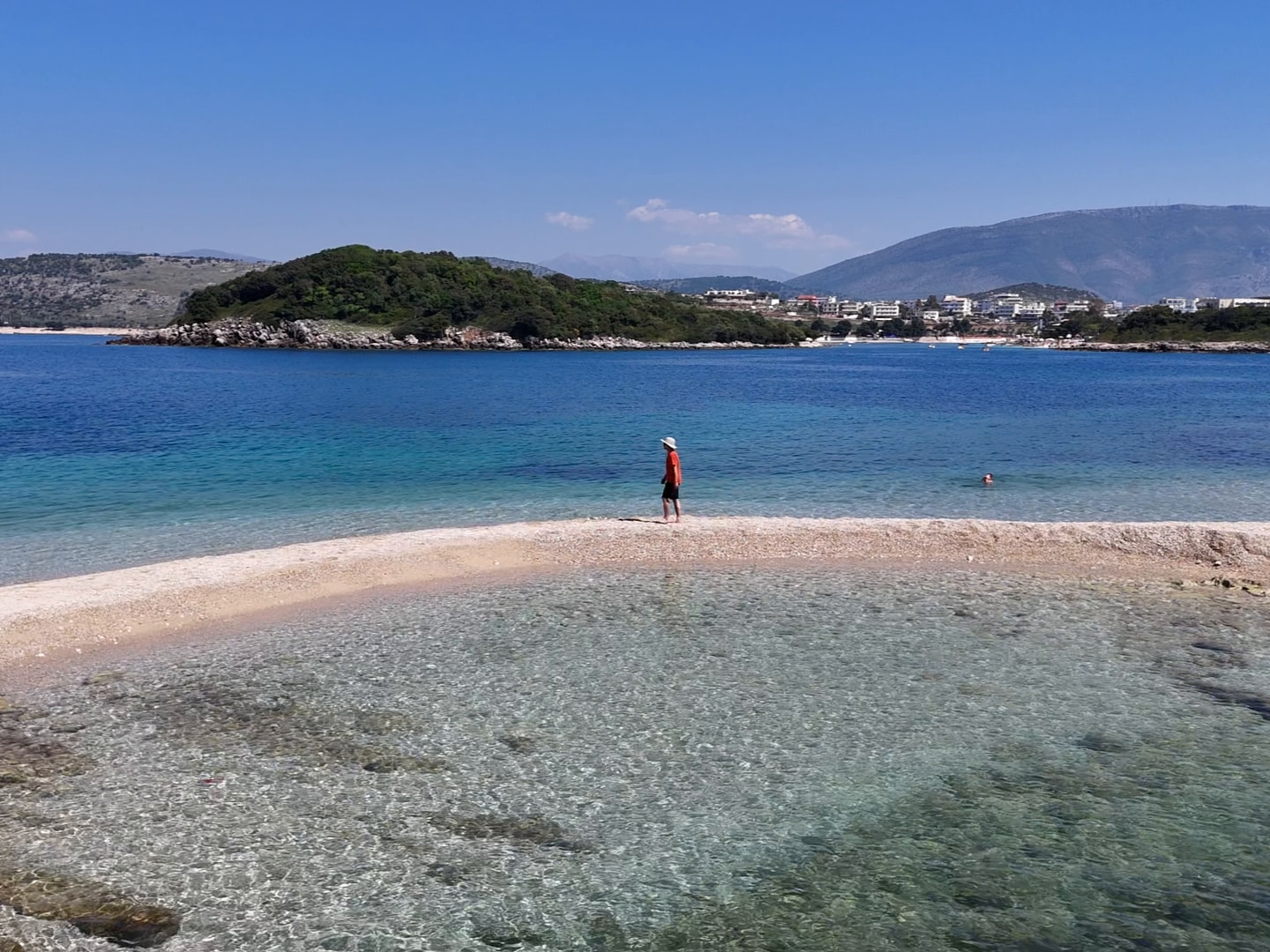
Talk about travel perks! They paid for a boat to take us out to the nearby Twin Islands of Ksamil. The geography here is absolutely mind-blowing. You have these two lush, rocky islets sitting out in the sea, but what makes them truly magical is a narrow ribbon of sand and tiny pebbles that connects them like a natural bridge.
Walking along this sandbar feels surreal, even if the small stones give your bare feet a slightly painful, "acupressure" massage with every step. But you forget the prickliness the moment you look down: you have crystal-clear, turquoise water gently lapping at your feet from both sides simultaneously. It’s as if nature rolled out a private runway right in the middle of the ocean. They told me that during the summer, this tiny slice of paradise gets completely packed with people lying shoulder-to-shoulder all over the sand.
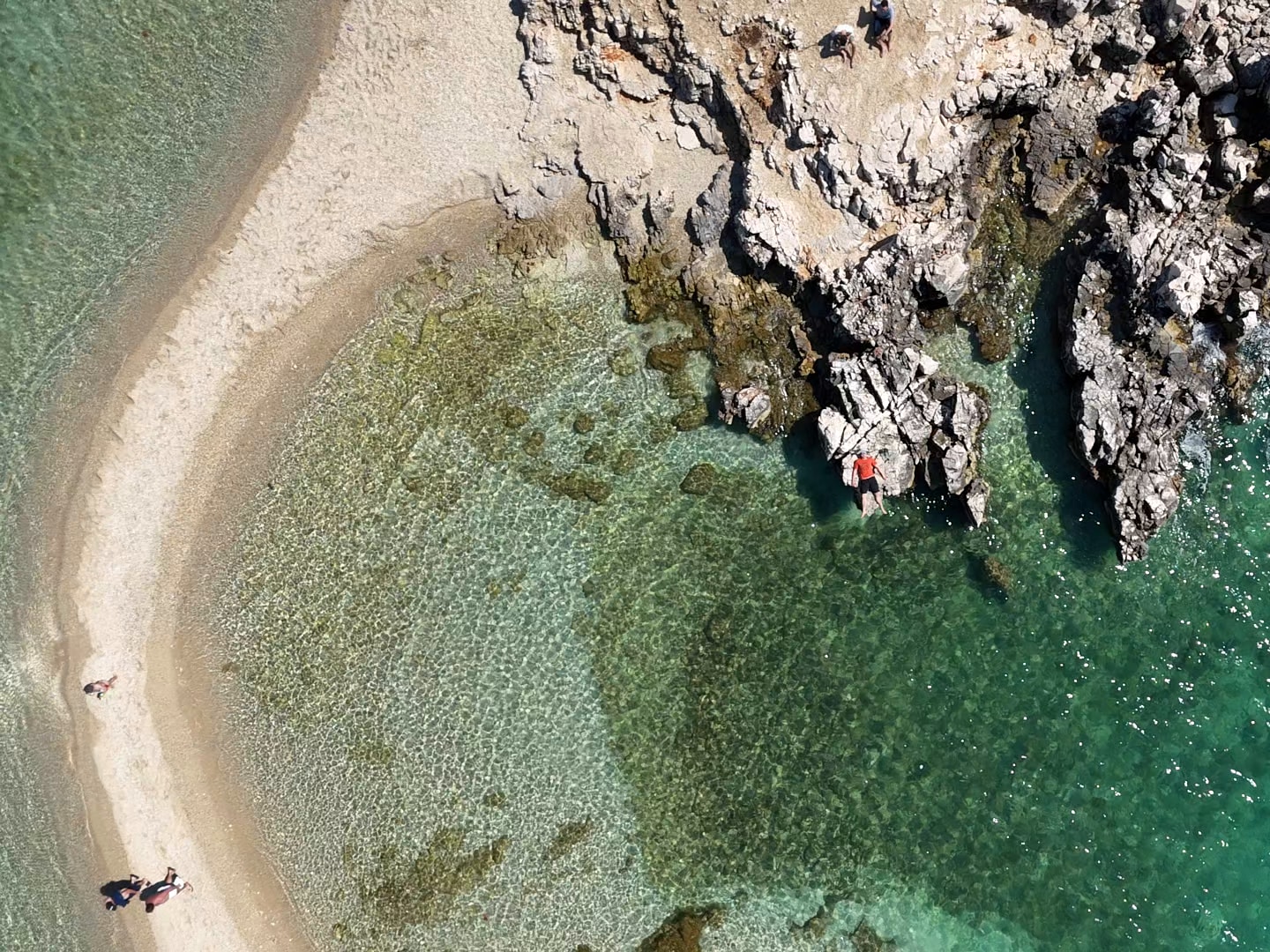
After "work" was done, we went back to the Ksamil beach with the boat, and we couldn't resist jumping into the sea. I have to say, the Ionian Sea in April is still pretty cold! It was a brutally refreshing swim, to say the least.
We drove all the way back to Sarandë to take a shower and rest a bit. Then we gathered again to head up to the Lëkurësi Castle just in time for the golden hour. The lighting was pure magic, and we captured some absolutely incredible sunset footage!
Sarandë's Best Kept Secret: Seafood from a Local Fishmonger
If you want the absolute freshest seafood in Sarandë without the sit-down restaurant price tag, skip the tourist traps and head straight to a local neighborhood fish shop called Pasuria e Detit - Peshk i freskët (which literally means "The Wealth of the Sea - Fresh Fish").
This place is a pure, authentic fishmonger shop that happens to have an fierce grill in the back. Your experience starts at the ice counter, where you pick out the daily catch: wild sea bass, giant prawns, octopus tentacles, or squid. Everything is weighed right in front of you with total price transparency.
Once you’ve made your choice, you choose your cooking style, and the chef gets to work on your order to-go:
-
Grilled: They throw your fresh fish or octopus straight onto the scorching grill with nothing but local olive oil, sea salt, and a squeeze of lemon. When they hand it to you in a container, it’s still sizzling and packed with smoky flavor.
-
Fried: If you choose baby squid or small local fish, they toss them in a light batter and fry them to a perfect, piping-hot golden crisp.
There is absolutely no dine-in seating here. Grab your steaming box of freshly cooked seafood, walk a few minutes down to the waterfront promenade, find a bench, and have an epic seaside picnic while watching the locals pass by. Alternatively, take it back to your hotel balcony and pair it with a cold Albanian beer. It’s raw, authentic, and easily one of the best meals you'll have on the coast!
Thanks for reading! Blogging is hard work, and your support keeps me going. If this post was helpful, you can buy me a coffee below to support my ongoing travels. Highly appreciate it! 👇
