Things to Do in Gjirokastër | the City of Stones
Contents[hide]
What to Expect in Gjirokastër
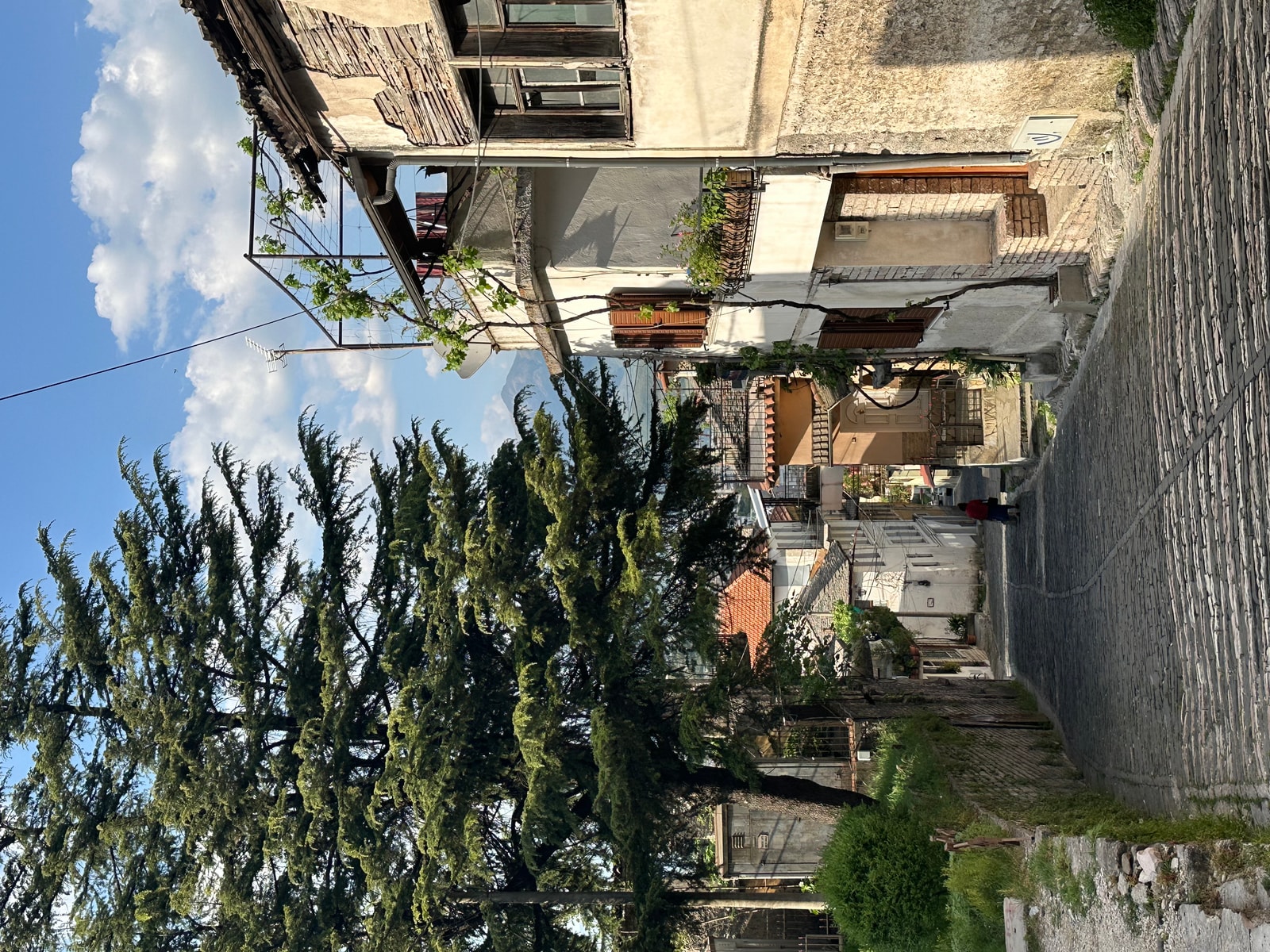
Gjirokastra lies in southern Albania, draped across the slopes of the Drino Valley. As one of the country's most significant historical destinations, it was inscribed as a UNESCO World Heritage Site in 2005. Its reputation as the City of Stones is entirely literal: many houses here are built from stone, even their roofs!
🏰 Gjirokastra Castle
The castle sits at the highest point of the old town — one of the largest fortresses in the Balkans, rising from the hilltop and commanding the city and the Drino Valley below. Entry fee is 400 lek.
Its history comes in distinct layers. The earliest fortifications date back to the 12th century, and the fortress fell into Ottoman hands in 1419. However, its most massive transformation occurred at the end of the 18th century under the ruler Ali Pasha Tepelenë, turning it into the formidable military stronghold that controlled southern Albania. After the communists came to power, Hoxha's regime repurposed the fortress into a notorious prison for political detainees.
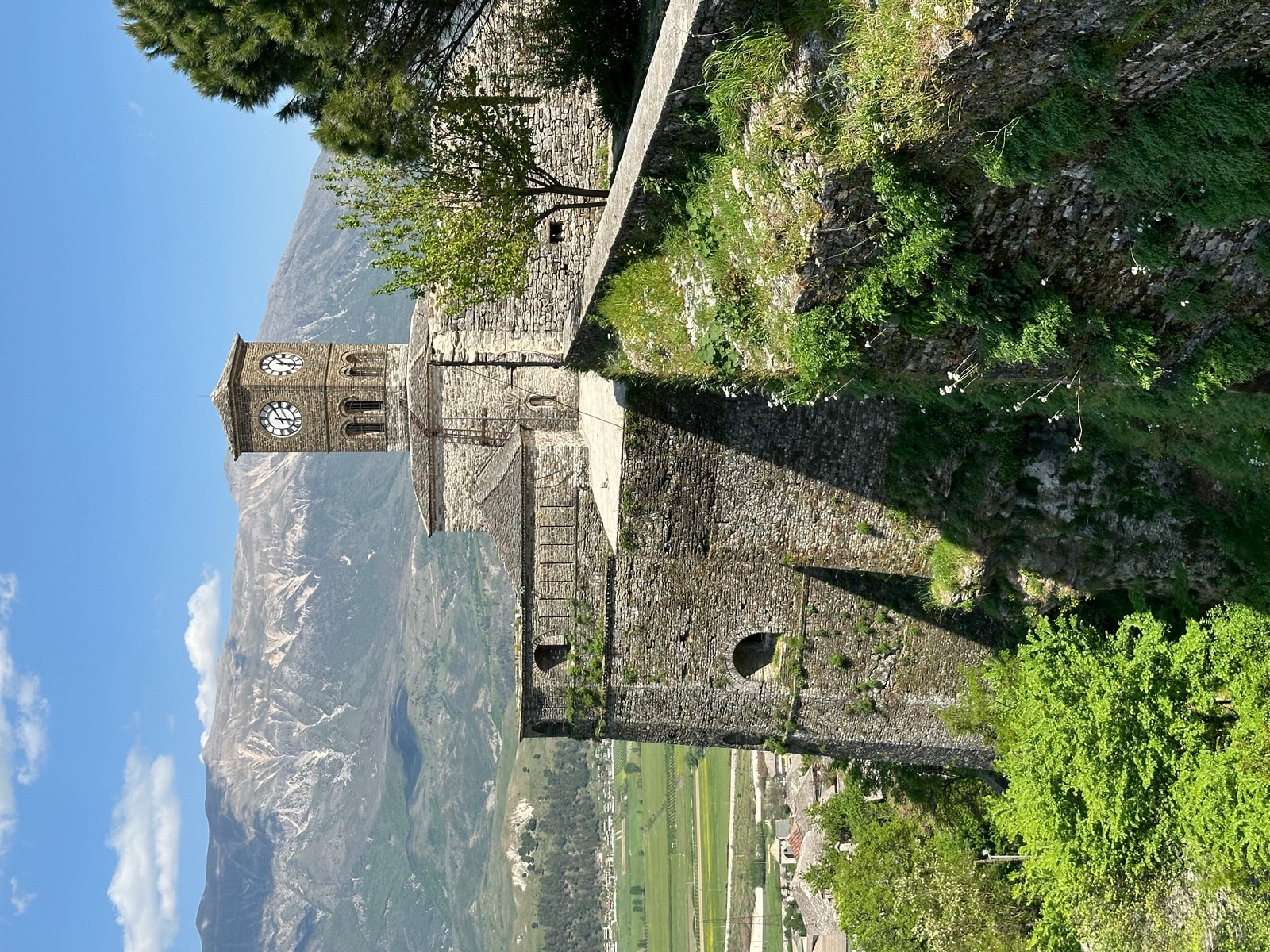
Clock Tower
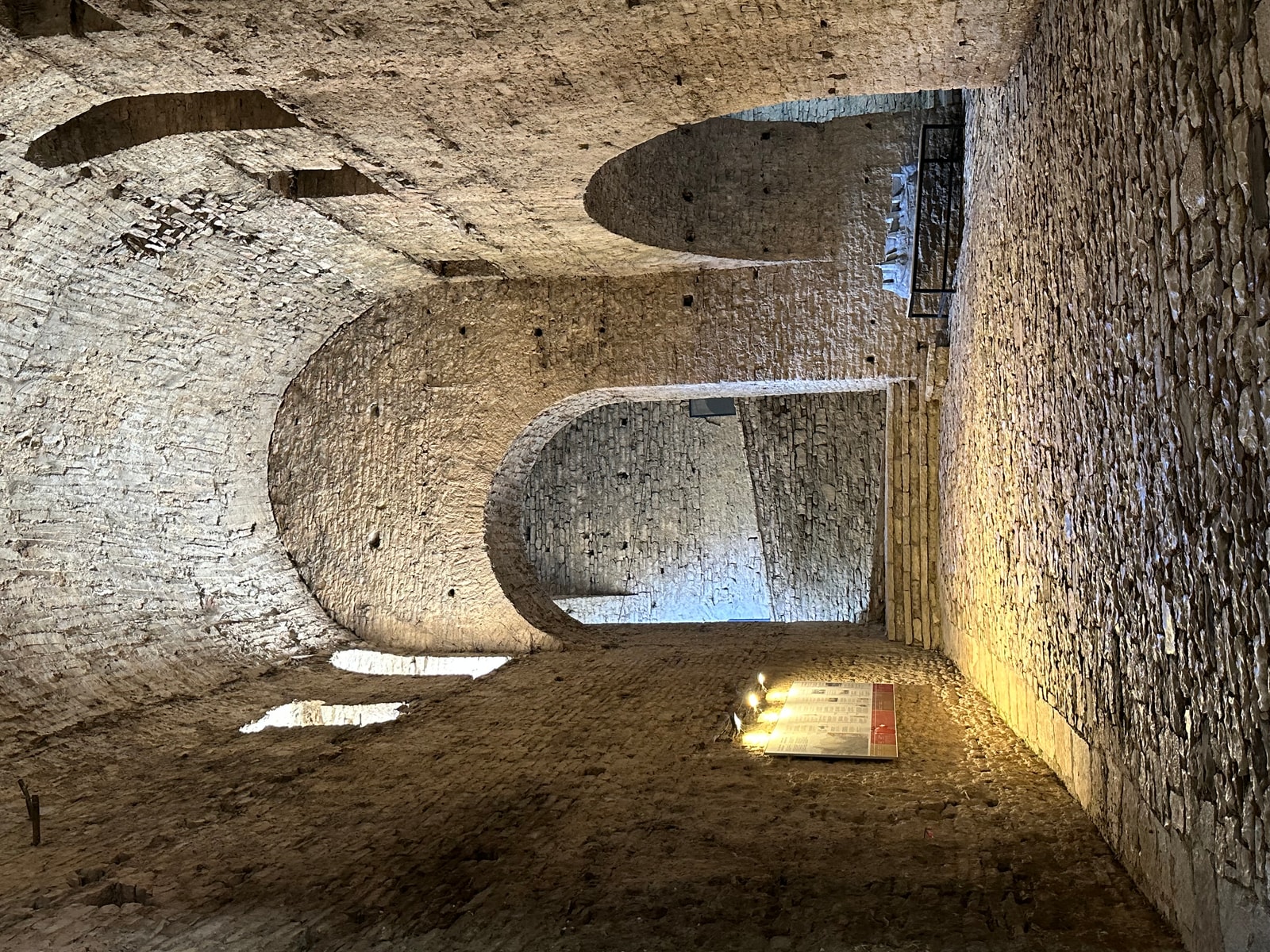
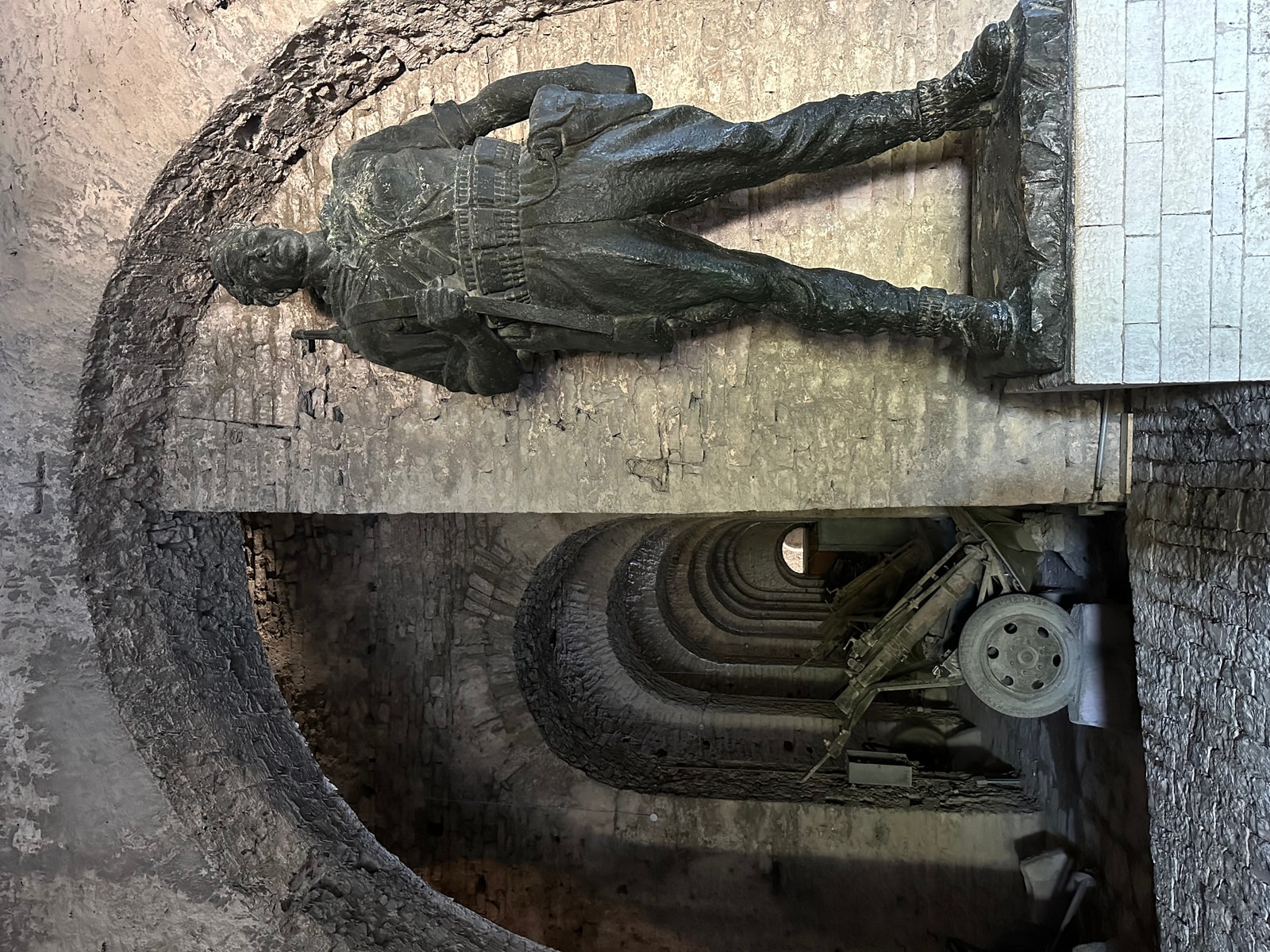
It serves as the Arms Museum too. There are several Italian and German tanks captured during the Second World War under the roof of the castle. What surprised me most is an US military aircraft in the courtyard. According to US newspaper reports from January 1958, the pilot was flying from the US airbase at France to Italy. On the way, he got lost in heavy fog and went off course. Running low on fuel, he made an emergency landing in Albania. But according to Radio Tirana broadcasts from the same time, pilots of the Albanian People's Army intercepted a US spy plane in Albanian airspace and forced it to land at Rinas airport.
While the castle provides a sweeping panoramic view, it is the unique traditional houses clustered at the foot of the hill that truly demand my attention.
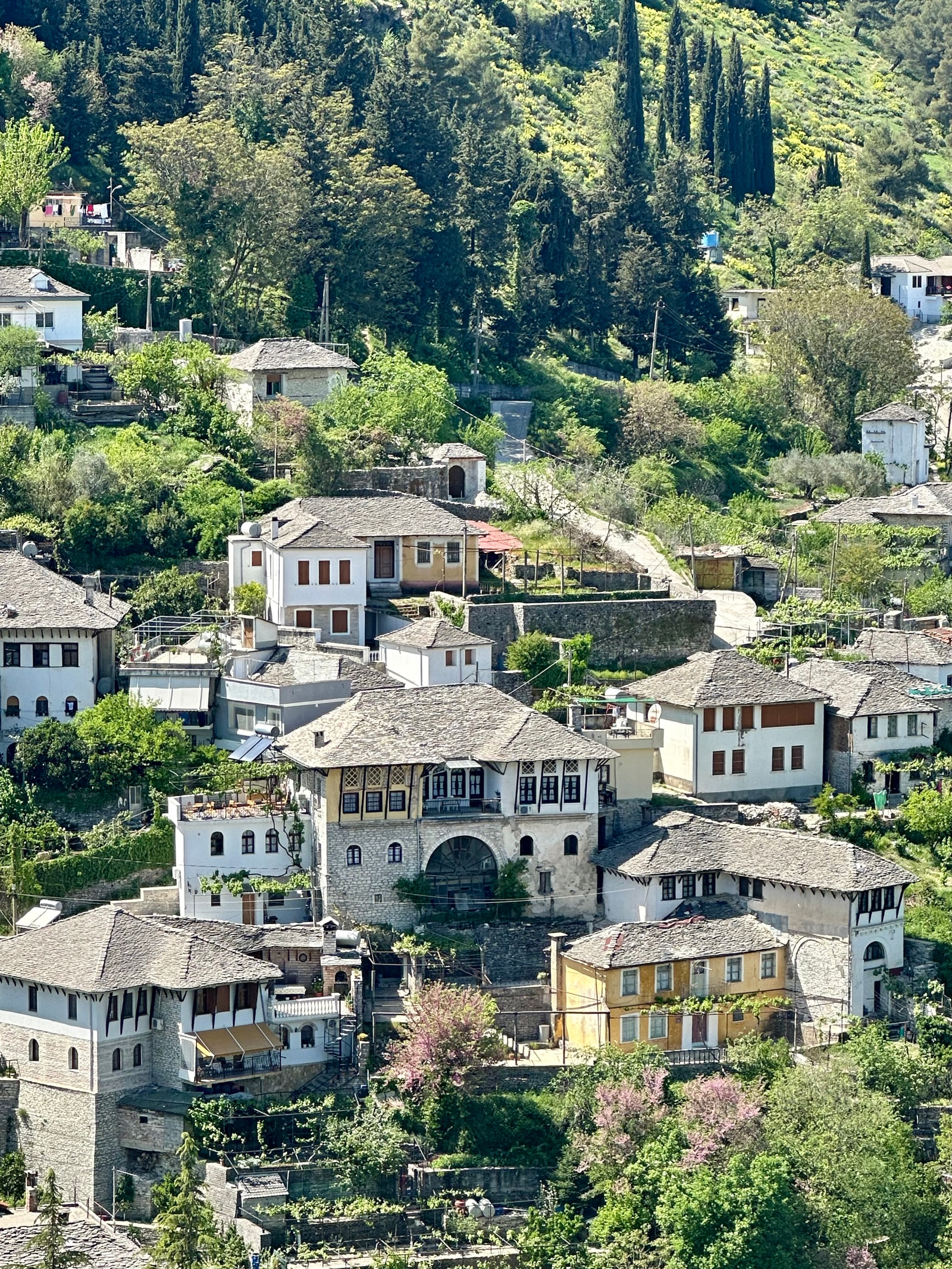
🏡 Zekate House
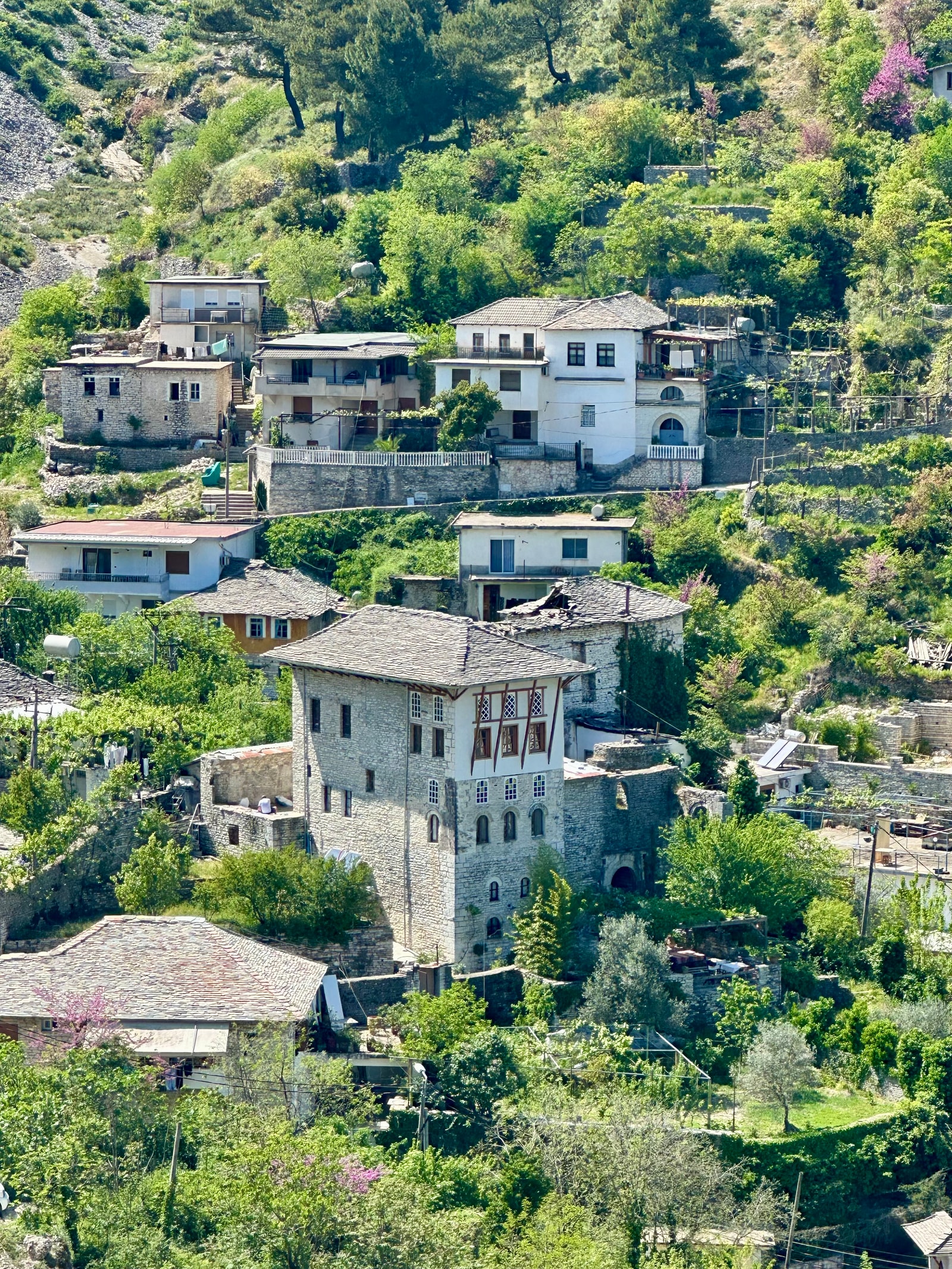
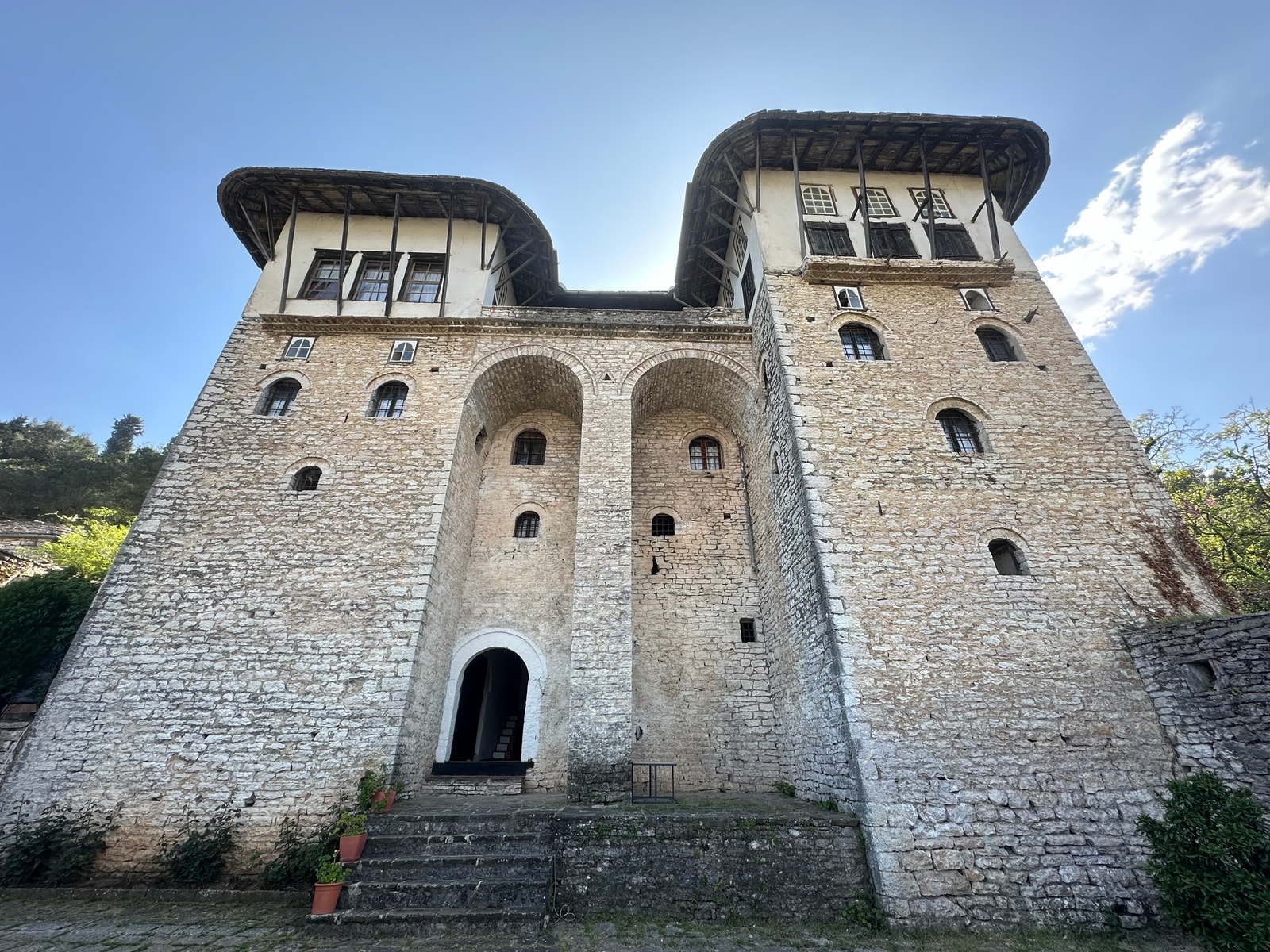
Located just a short distance from the castle, Zekate House stands as one of the old town's most worthwhile historic residences to explore.
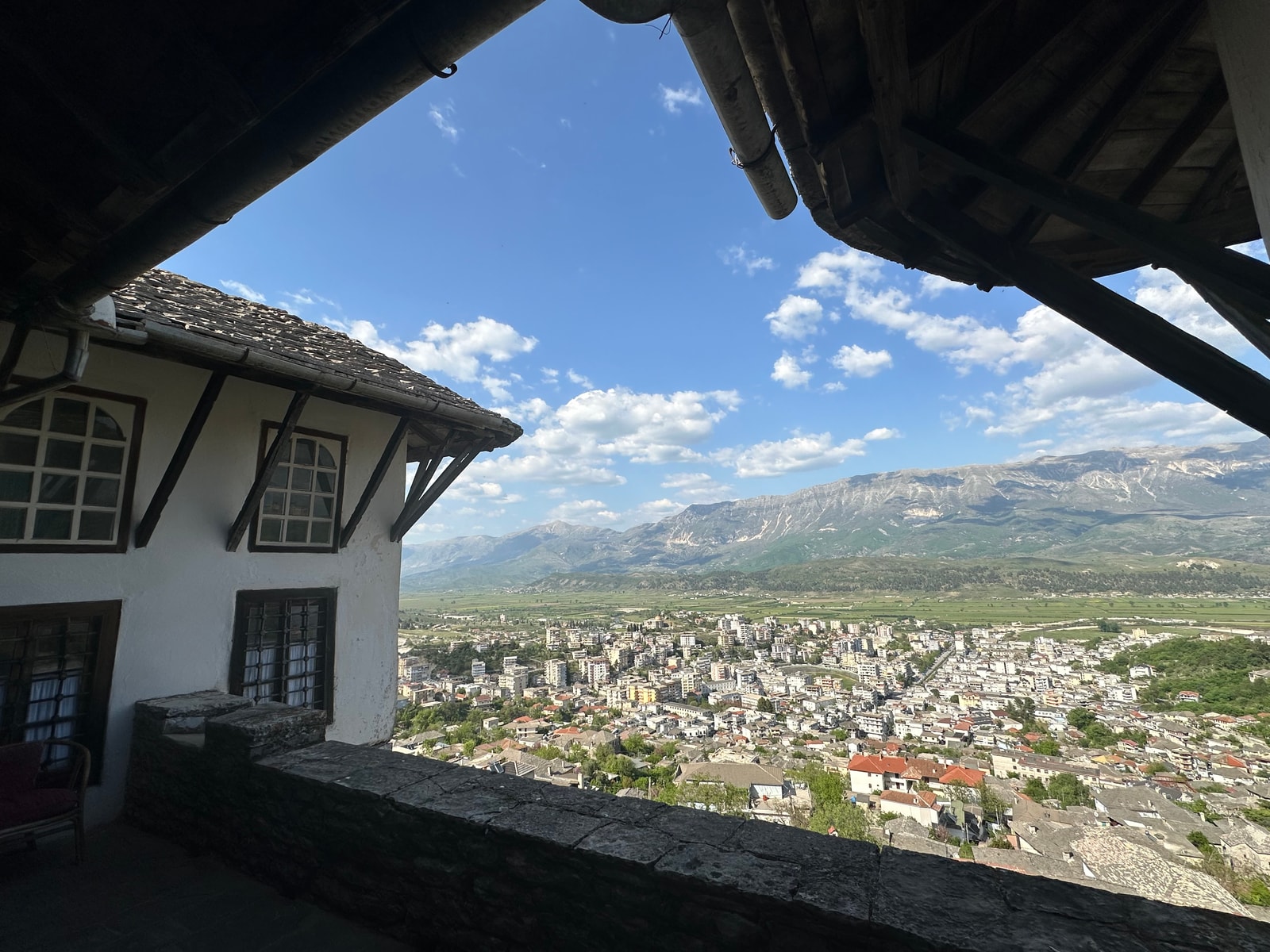
Built in 1811, Al Pasha gifted the tower house to the Zekate family, members of the local Ottoman elite. It is a textbook example of a Gjirokastra kulla — the fortified Ottoman tower house that defines the city's domestic architecture. The ground floor has no windows and features walls of extraordinary thickness. In the volatile conditions of Ottoman-era Albania, the lower floors had to withstand armed attacks, so windows were eliminated as vulnerabilities.
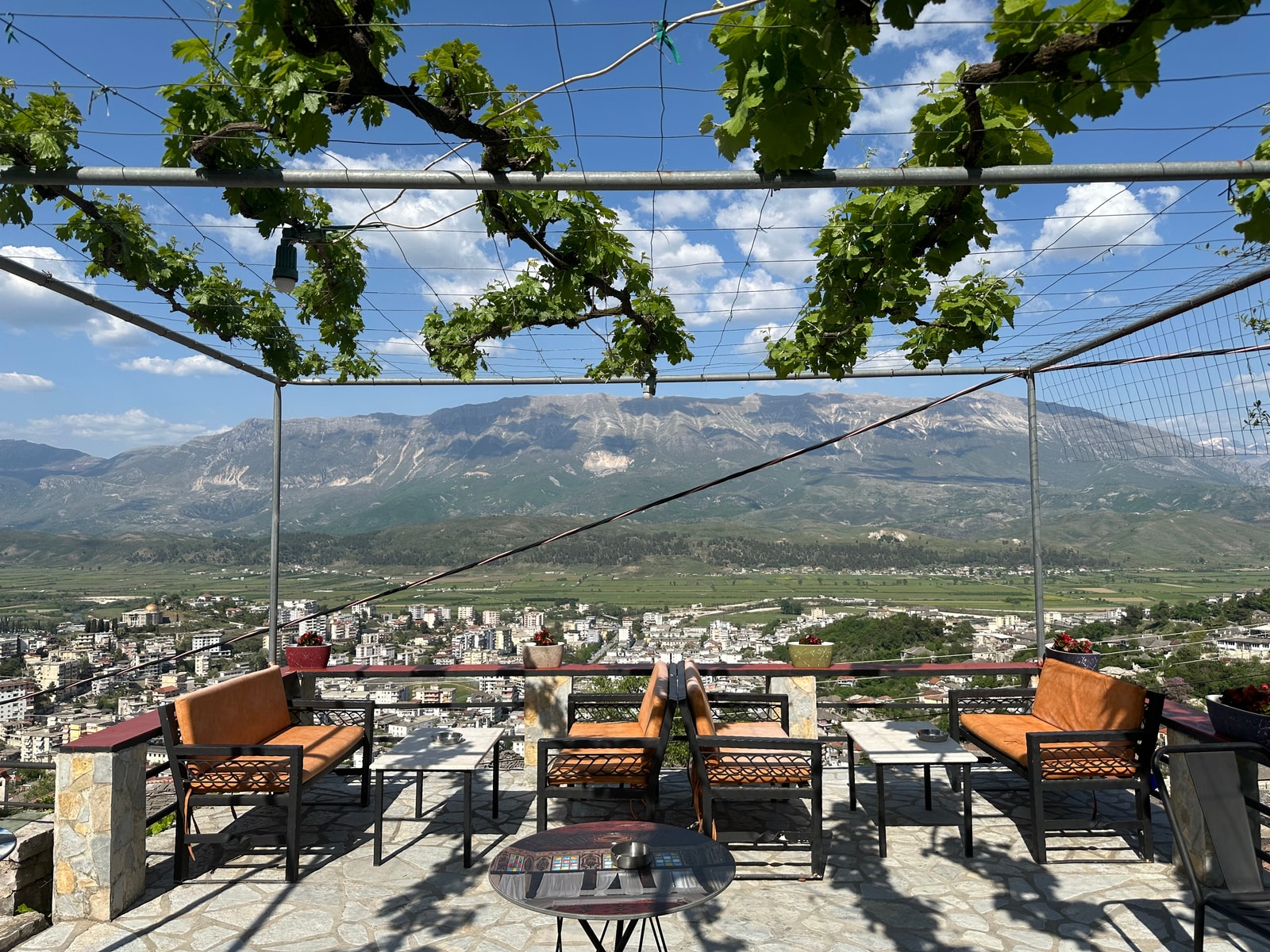
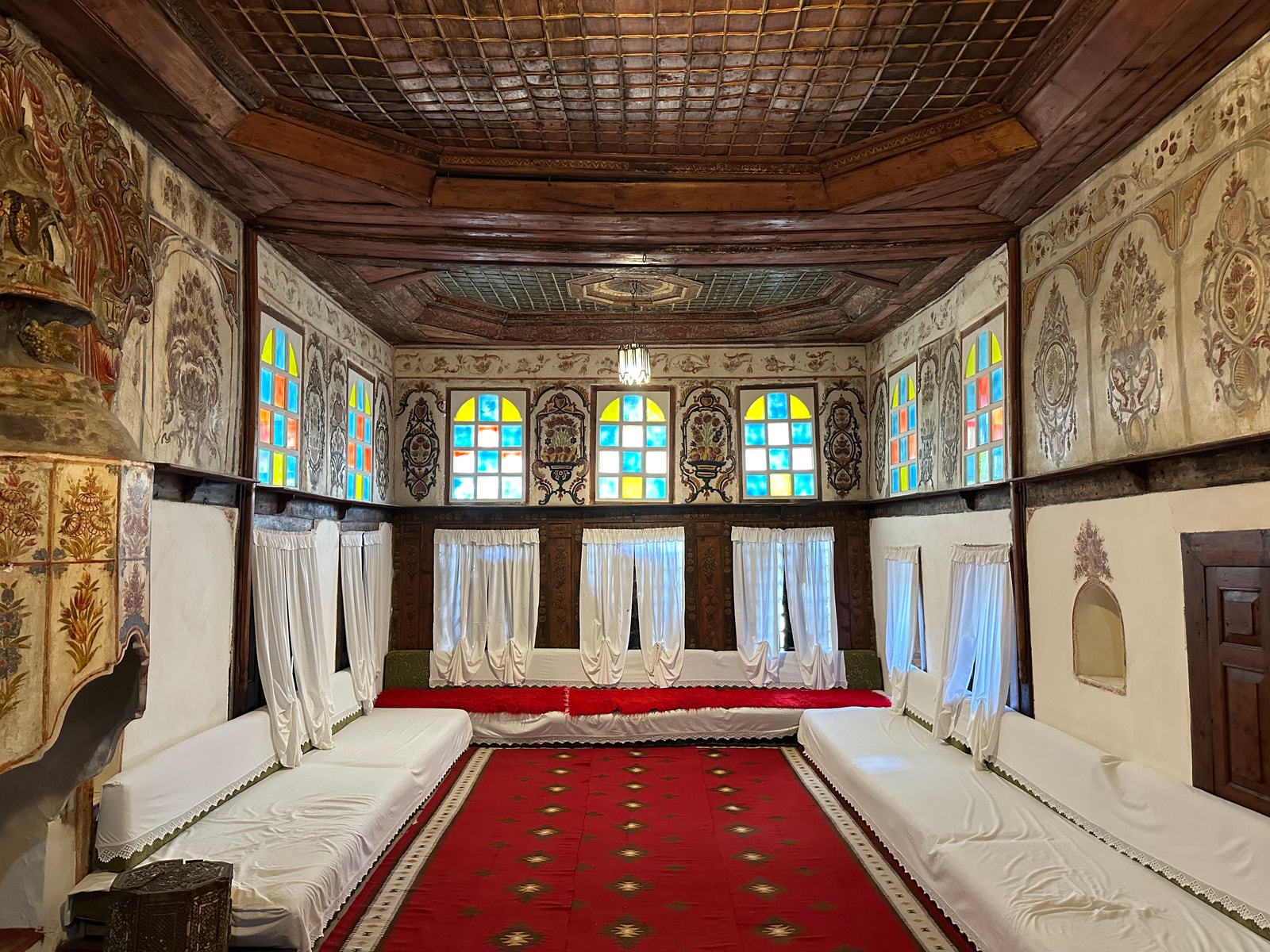
The balcony on the fourth floor offers an exceptional vantage point, where the densely packed buildings of the valley and the slopes of the opposite hillside unfold before you. It is said that the head of the household used to sit here, watching laborers cultivate his fields below. The rooms are adorned with mural paintings depicting various baskets of flowers and fruits. Throughout the space, the wooden ceilings and fittings are intricately engraved and painted. The family's descendants live in a new home built right next to the historic residence, continuing to watch over the ancestral building.
🛒 The Old Bazaar
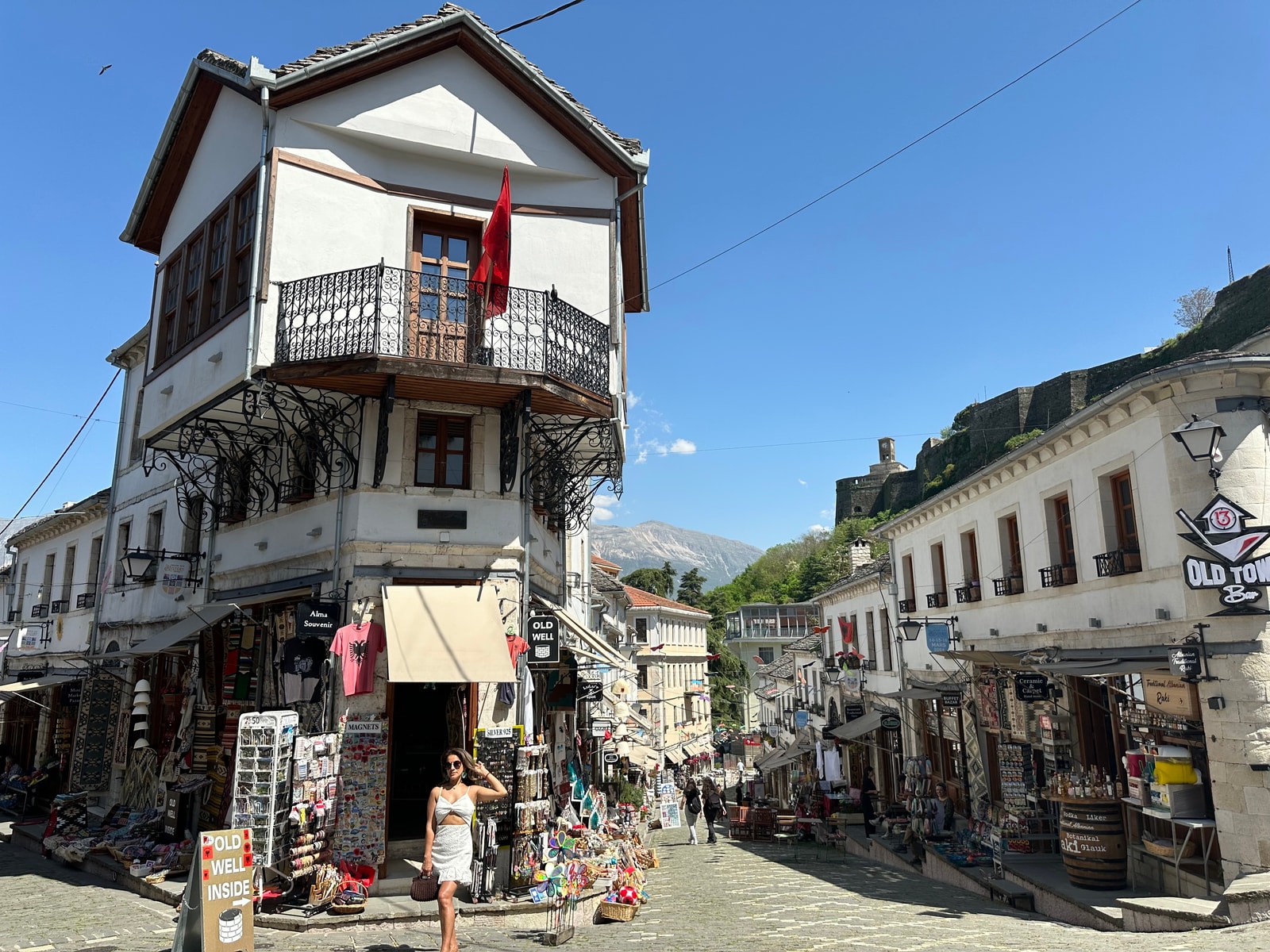
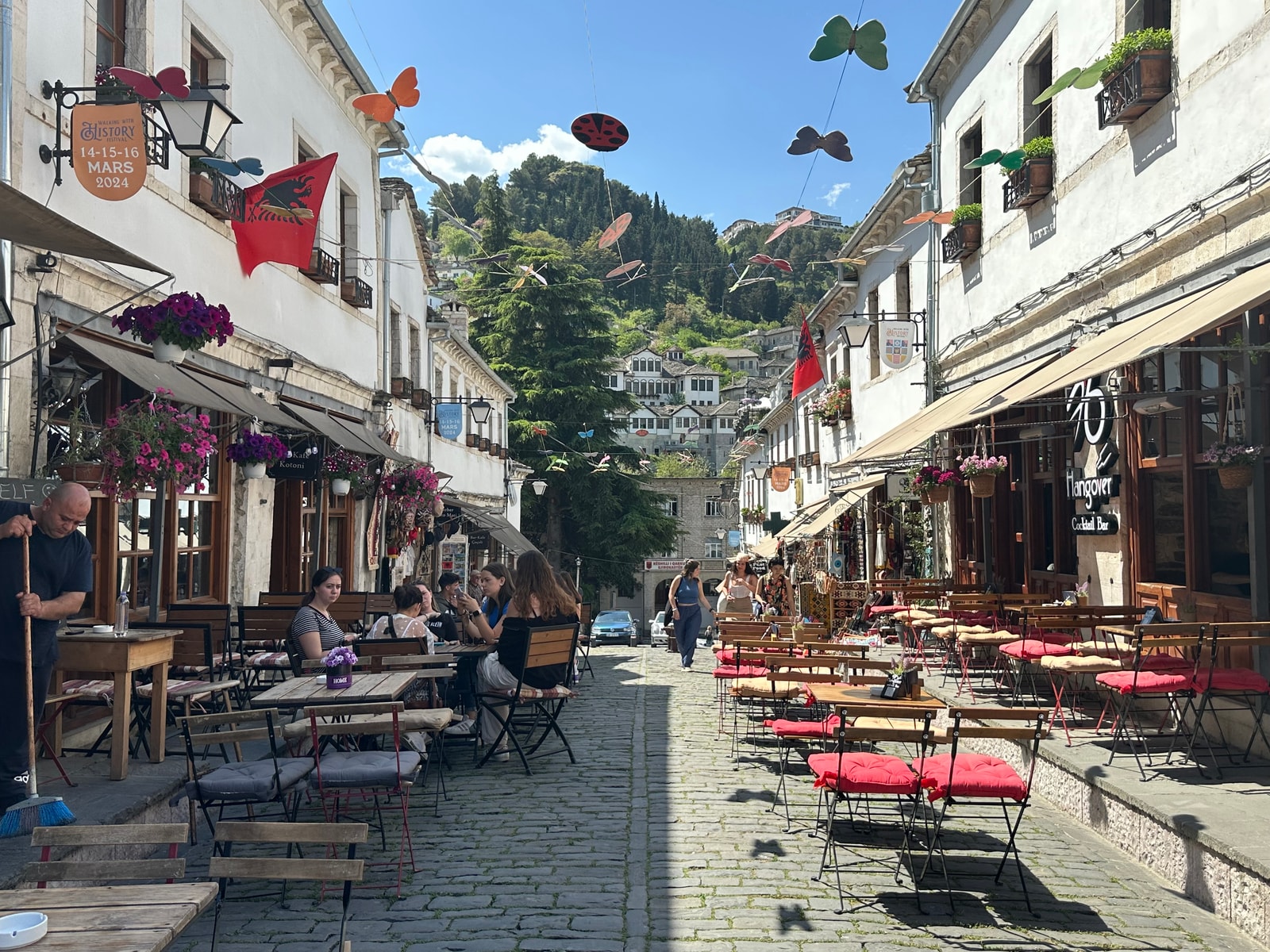
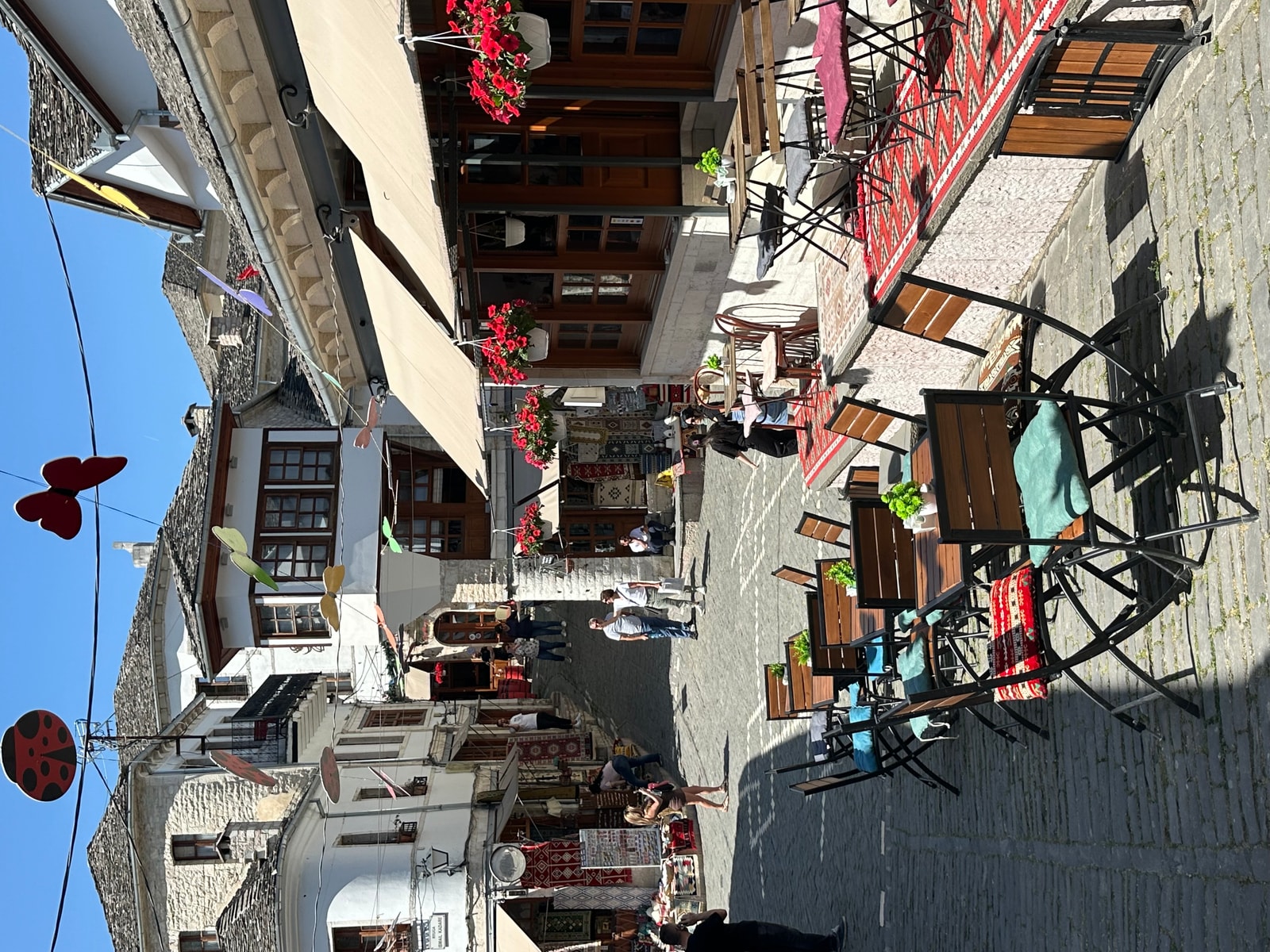
The Old Bazaar occupies one of the flatter stretches of the old town, its cobbled streets lined with craft shops, leather goods, carpet sellers, and cafés housed in Ottoman-era shopfronts. In the 18th and 19th centuries, this was a vital trading hub for southern Albania, drawing merchants from across the region.
The bazaar today bears little resemblance to that bustling past. Local daily life has long since moved to the newer parts of town, and most of what remains is aimed squarely at visitors — handmade copperware, embroidery, and small wooden objects arranged in doorways, carpets hung on walls, and the occasional shopkeeper dozing on a step. At the far end, a few cafés occupy old buildings with stone archways, serving cheap espresso. It does not take long to walk through, but it rewards slowing down and sitting with a coffee for a while.
🗺️Places I skipped/missed
Skënduli House: Another great Ottoman residence of the old town, also built in the early 19th century. By most accounts, its interior is even better preserved than Zekate House, featuring painted ceilings and a clearer separation between formal reception rooms and private quarters. The two houses are not far apart, and I didn't go in—which remains one of the day's genuine regrets.
Cold War Tunnel: Built in the 1970s during the Hoxha era, this tunnel runs for several hundred metres beneath the city. It features dozens of rooms designed to shelter government officials in the event of a nuclear war. Hoxha's Albania constructed more than 170,000 concrete bunkers across the country; this tunnel is among the largest of those installations, standing as a bleak monument to the defensive paranoia of that period.
👥Two Natives, Two Legacies
Gjirokastra is the birthplace of two figures whose influence on Albanian history could hardly be more different.
Enver Hoxha went on to rule Albania from 1944 to 1985 as one of the longest-serving dictators in 20th-century Europe. His former residence has since been converted into an ethnographic museum displaying traditional objects from the region.
Ismail Kadare, Albania's most celebrated writer and a perennial Nobel Prize contender, passed away in 2024. His masterpiece, Chronicle in Stone, is set in this city during the Second World War, narrated through the eyes of a child. The author's description is masterfully incisive. I feel compelled to include an excerpt here: "It was a strange city, and seemed to have been cast up in the valley one winter's night like some prehistoric creature that was now clawing its way up the mountainside. Everything in the city was old and made of stone, from the streets to the roofs of the sprawling age-old houses covered with grey slates like gigantic scales…While preserving human life rather awkwardly by means of its tentacles and its stony shell, the city also gave its inhabitants a good deal of trouble, along with scrapes and bruises. That was only natural, for it was a stone city and its touch was rough and cold."
Thanks for reading! Blogging is hard work, and your support keeps me going. If this post was helpful, you can buy me a coffee below to support my ongoing travels. Highly appreciate it! 👇
